ES
ES  EN
EN  FR
FR  DE
DE  RU
RU  AR
AR  PT
PT  JA
JA  KO
KO 
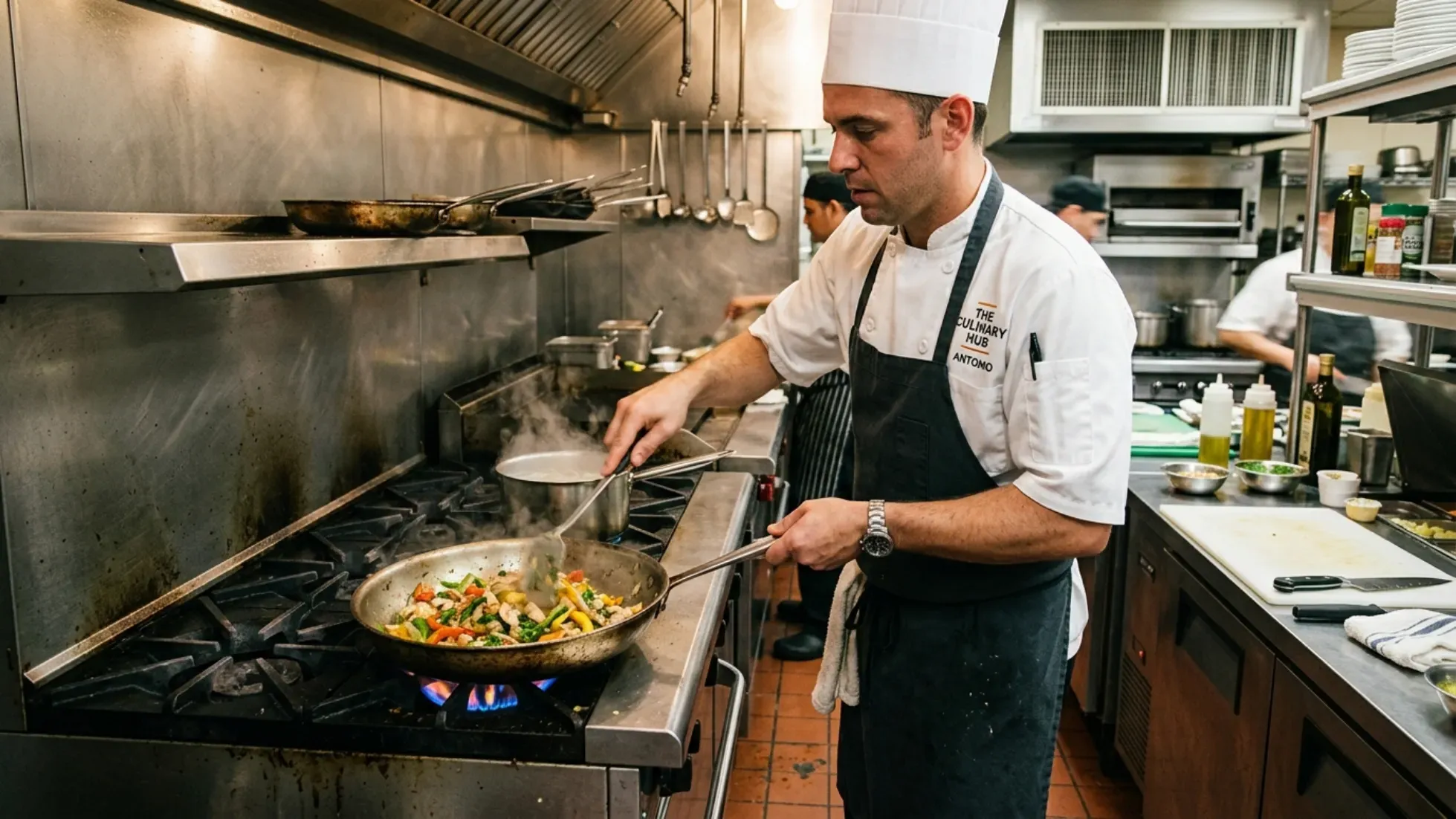
Las sartenes antiadherentes dominan las cocinas domésticas porque reducen la fricción al cocinar. Menos aceite, limpieza más fácil, menos requisitos de habilidad. Esta lógica funciona en entornos controlados y de baja frecuencia.
Pero, por otro lado, como mayorista de utensilios de cocina de acero inoxidable, Oportunidades observó que, según nuestros datos de ventas, las cocinas profesionales tienden a pasar por alto las sartenes antiadherentes, porque funcionan con limitaciones diferentes: calor continuo, alto rendimiento y tolerancia cero a los fallos del equipo.
En ese entorno, la batería de cocina no se elige por comodidad. Se elige por:
- Fiabilidad térmica
- Durabilidad estructural
- Constancia en situaciones de estrés repetido
Aquí es donde las sartenes antiadherentes empiezan a fallar desde el punto de vista operativo, y la razón por la que los chefs las evitan sistemáticamente como utensilios principales.
El principal problema: las sartenes antiadherentes no soportan las condiciones de la cocina profesional
El calor daña los revestimientos antiadherentes
La mayoría de los utensilios de cocina antiadherentes utilizan revestimientos a base de polímeros, como los sistemas de PTFE. Estos revestimientos tienen límites térmicos definidos.
En cocinas profesionales:
- Los quemadores funcionan continuamente
- Los niveles de calor son frecuentemente altos y sostenidos
- Las sartenes rara vez se dejan enfriar completamente entre usos
En estas condiciones, los revestimientos se degradan gradualmente. Incluso antes de que aparezcan daños visibles, la estabilidad del rendimiento disminuye.
Esto crea una limitación estructural: los utensilios de cocina antiadherentes son intrínsecamente sensibles a la temperatura, mientras que la cocina profesional es intensiva en temperatura.
Las cocinas comerciales requieren un control agresivo del calor
La cocina profesional no es una cocina suave.
Los chefs actúan con regularidad:
- Chamuscado a alta temperatura
- Pardeamiento y desarrollo del cariño
- Reducción rápida de salsas
- Saltear a fuego alto sostenido
Estas técnicas requieren utensilios de cocina capaces de absorber y distribuir el calor sin comprometer su estructura.
Las superficies antiadherentes no están optimizadas para este entorno. Dan prioridad al deslizamiento de la superficie sobre la resistencia térmica, lo que limita su uso en situaciones de cocinado de alto rendimiento.
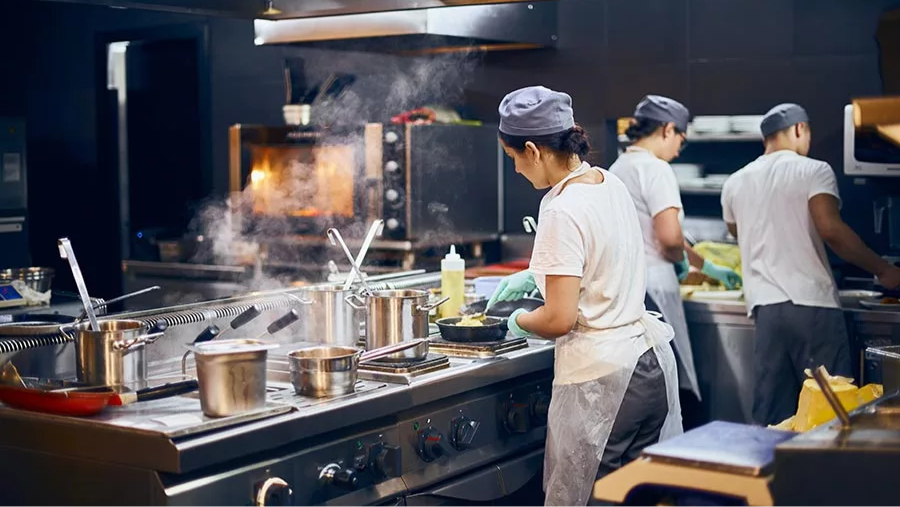
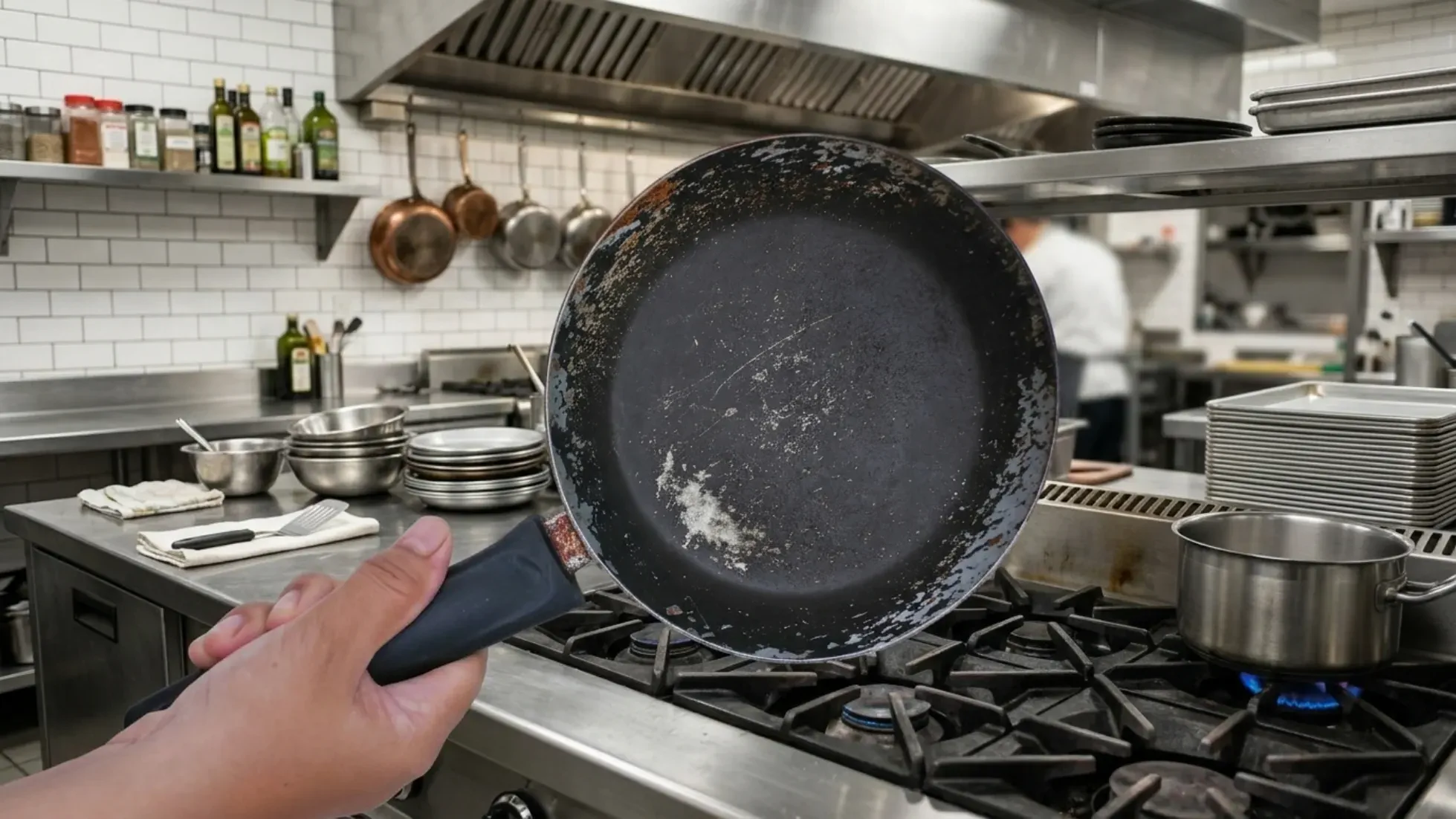
Las sartenes antiadherentes se desgastan demasiado rápido en los restaurantes
El uso a alta frecuencia acelera el desgaste de la superficie
En una cocina comercial, una sola sartén puede utilizarse docenas o incluso cientos de veces por semana.
Este nivel de uso se acelera:
- Fatiga del revestimiento
- Microrrayado
- Degradación superficial
Lo que dura años en una cocina doméstica puede durar sólo meses en condiciones profesionales.
Los utensilios metálicos y las operaciones rápidas causan daños
A diferencia de la cocina casera, las cocinas profesionales dan prioridad a la rapidez. Eso a menudo significa:
- Espátulas de metal
- Volteo y raspado rápidos
- Almacenamiento apilable y movimiento constante
Incluso las pequeñas abrasiones se acumulan rápidamente, comprometiendo la integridad del revestimiento.
Una vez que la superficie se ve comprometida, el rendimiento se vuelve inconsistente y se hace necesaria su sustitución.
Los costes de sustitución se vuelven insostenibles
A gran escala, los utensilios de cocina no son una compra única, sino un coste operativo recurrente.
La sustitución frecuente de las sartenes antiadherentes provoca:
- Mayores costes de adquisición a largo plazo
- Mayores trastornos operativos
- Resultados de cocción incoherentes en todas las estaciones
Por eso, los chefs tratan los utensilios antiadherentes como un artículo de consumo, no como un activo esencial de la cocina.
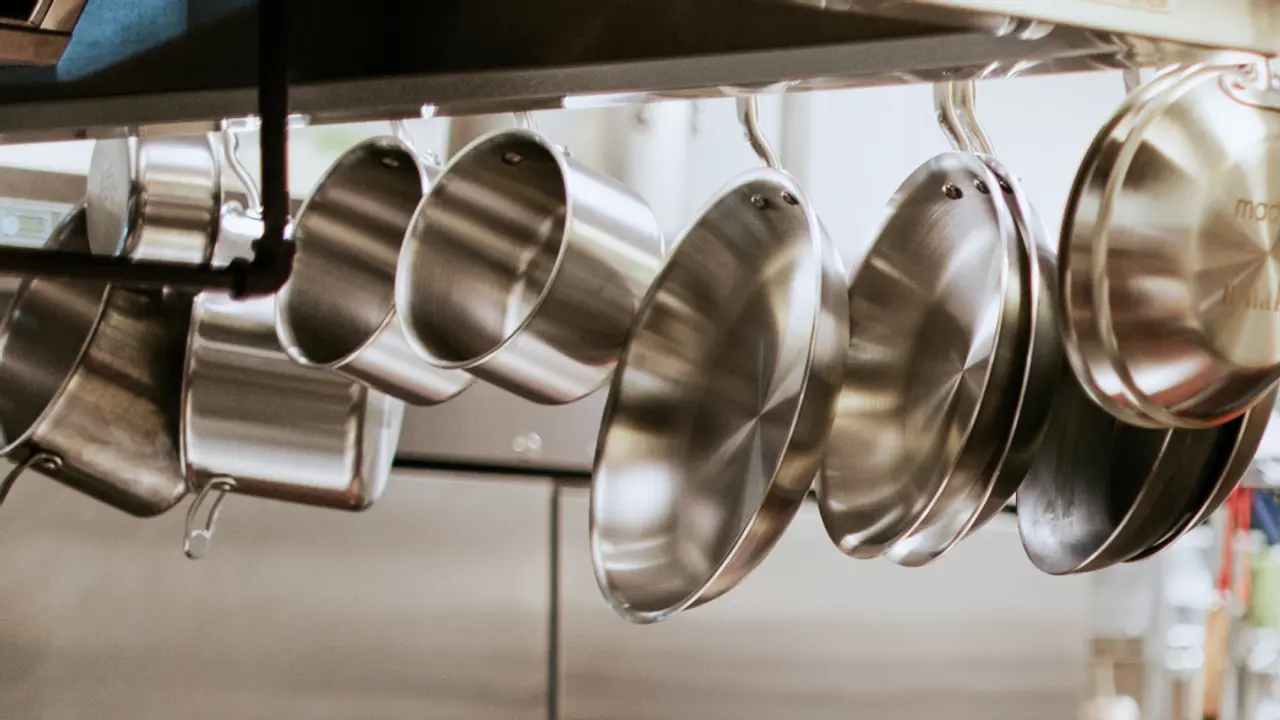
Por qué los chefs prefieren las sartenes de acero inoxidable
Mejor rendimiento a altas temperaturas
Las sartenes de acero inoxidable son estructuralmente estables a altas temperaturas. No necesitan revestimientos, lo que les permite funcionar con seguridad en condiciones de exposición prolongada al calor.
Esto los hace adecuados para:
- Proteínas abrasadoras
- Dorar carnes
- Afición por las salsas
Dorado y desarrollo del sabor superiores
Uno de los aspectos más importantes de la cocina profesional es la estratificación de sabores.
El acero inoxidable lo permite:
- Desarrollo de la reacción de Maillard
- Formación de espuma en la superficie de la sartén
- Desglaseado controlado
Estos procesos son esenciales para la profundidad del sabor y no pueden reproducirse eficazmente en los utensilios de cocina antiadherentes.
Durabilidad a largo plazo
A diferencia de las baterías de cocina recubiertas, el acero inoxidable no pierde rendimiento por el desgaste de la superficie.
Una sartén bien hecha mantiene:
- Integridad estructural
- Respuesta al calor
- Estabilidad de la superficie
De este modo se reducen los ciclos de sustitución y se garantiza la uniformidad en el uso a largo plazo.
Por esta razón, muchas cocinas estandarizan el aprovisionamiento a través de un fabricante de baterías de cocina de acero inoxidable para garantizar un rendimiento coherente en todas las unidades.
Sin problemas de degradación del revestimiento
Sin revestimientos, no hay:
- No se pela
- Sin descamación
- No se estropea la superficie por el calor
Esto elimina uno de los principales puntos de fallo de los utensilios de cocina antiadherentes.
¿Son totalmente inútiles las sartenes antiadherentes en los restaurantes?
Donde los cocineros siguen usando antiadherentes
Las sartenes antiadherentes no se han eliminado de las cocinas profesionales. Simplemente son herramientas especializadas, que se utilizan cuando los requisitos de precisión y control de la temperatura son menores.
Los usos más comunes son:
- Huevos y tortillas
- Delicados filetes de pescado
- Cocinar con poca grasa o a baja temperatura
- Tareas de mantenimiento temporal o salteado ligero
Por qué se tratan como herramientas secundarias
La limitación no es la utilidad, sino alcance.
Las sartenes antiadherentes lo son:
- Gran eficacia en condiciones estrechas
- Poco fiable con un uso amplio y de alta intensidad
Esto los convierte en equipos complementarios y no fundacionales.
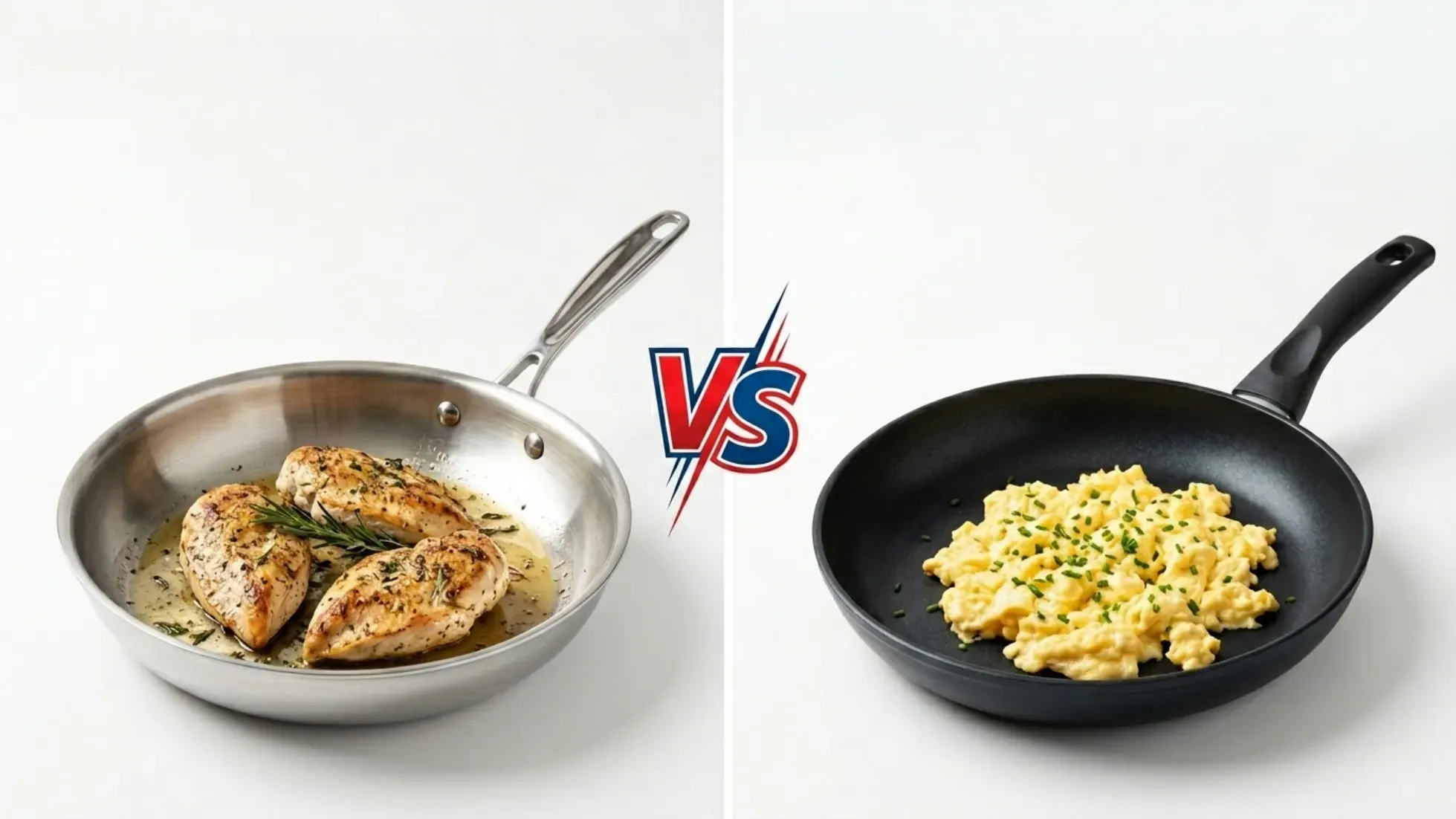
Acero inoxidable frente a antiadherente: ¿Qué importa realmente en la cocina profesional?
Tolerancia al calor
- Acero inoxidable: compatible con calor alto y sostenido
- Antiadherente: techo térmico limitado
Precisión en la cocina
- Acero inoxidable: permite dorar, desglasar y reducir
- Antiadherente: interacción limitada con la superficie
Longevidad y rentabilidad
- Acero inoxidable: larga vida útil, rendimiento estable
- Antiadherente: requiere sustitución frecuente
Mantenimiento y eficacia del flujo de trabajo
- Acero inoxidable: requiere técnica, pero resultados predecibles
- Antiadherente: más fácil al principio, pero incoherente con el tiempo en el uso profesional.
El factor seguridad: Por qué las cocinas profesionales prefieren materiales estables
Preocupación por la rotura del revestimiento
En entornos de altas temperaturas, la degradación del revestimiento se convierte en un factor de riesgo. Aunque no sea inmediatamente peligrosa, la pérdida de integridad del revestimiento provoca un rendimiento impredecible.
Estabilidad del acero inoxidable de calidad alimentaria
La seguridad y el rendimiento del acero inoxidable no dependen de los revestimientos. El acero inoxidable para uso alimentario se mantiene estable en condiciones normales de cocción y se utiliza ampliamente en entornos regulados de restauración.
Cumplimiento de la FDA y la LFGB en utensilios de cocina comerciales
Los utensilios de cocina de calidad profesional suelen coincidir con:
- Normas de contacto con alimentos de la FDA (EE.UU.)
- Requisitos LFGB (UE)
Estos marcos garantizan la estabilidad del material y la seguridad de la migración en condiciones de uso comercial.
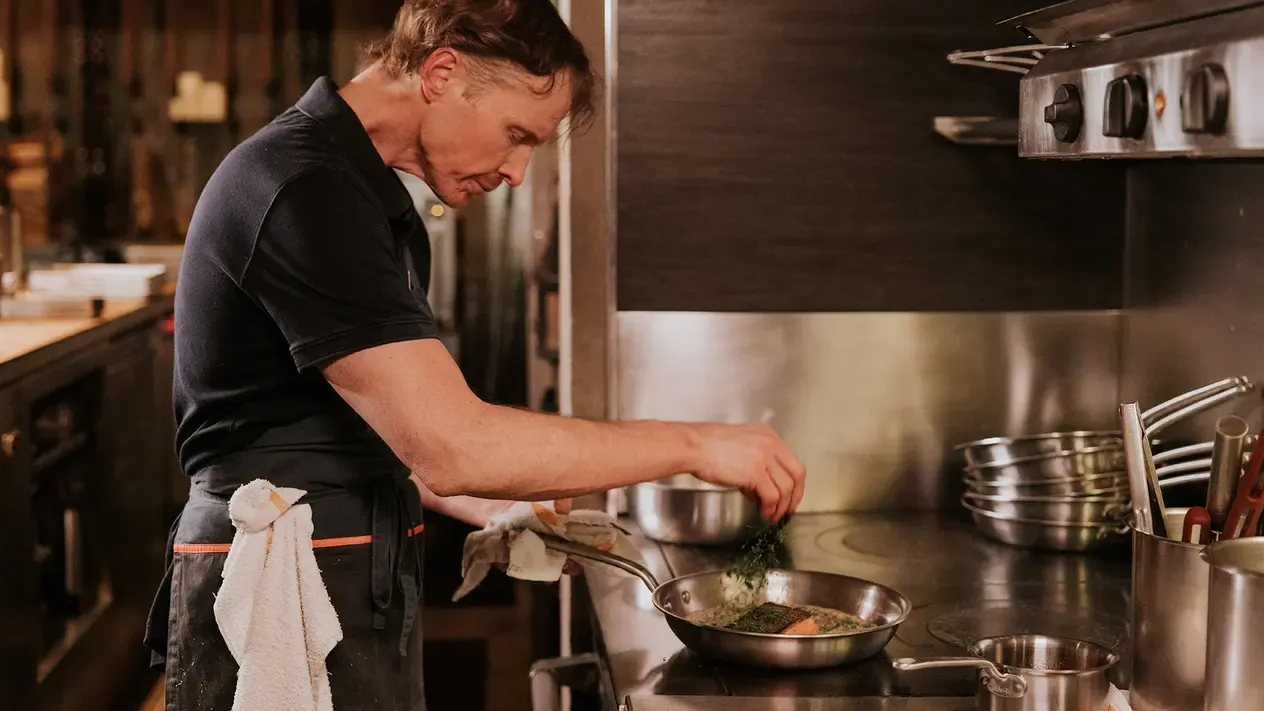
En qué se fijan las cocinas comerciales al elegir los utensilios de cocina
Durabilidad en uso continuo
Los utensilios de cocina deben soportar ciclos de calentamiento repetitivos sin que se degraden sus prestaciones.
Consistencia de la distribución del calor
Un calor desigual provoca resultados de cocción desiguales, lo que es inaceptable en entornos de servicio de gran volumen.
Fácil mantenimiento y limpieza
La eficacia en la limpieza afecta directamente a la velocidad de rotación de la cocina.
Suministro fiable y calidad de fabricación
Las grandes cocinas requieren ciclos de sustitución constantes y equipos estandarizados.
Por eso, muchos operadores trabajan con un [proveedor mayorista de utensilios de cocina] estable para garantizar la coherencia a largo plazo en todos los lotes de compra.
Lo que los cocineros caseros pueden aprender de las cocinas profesionales
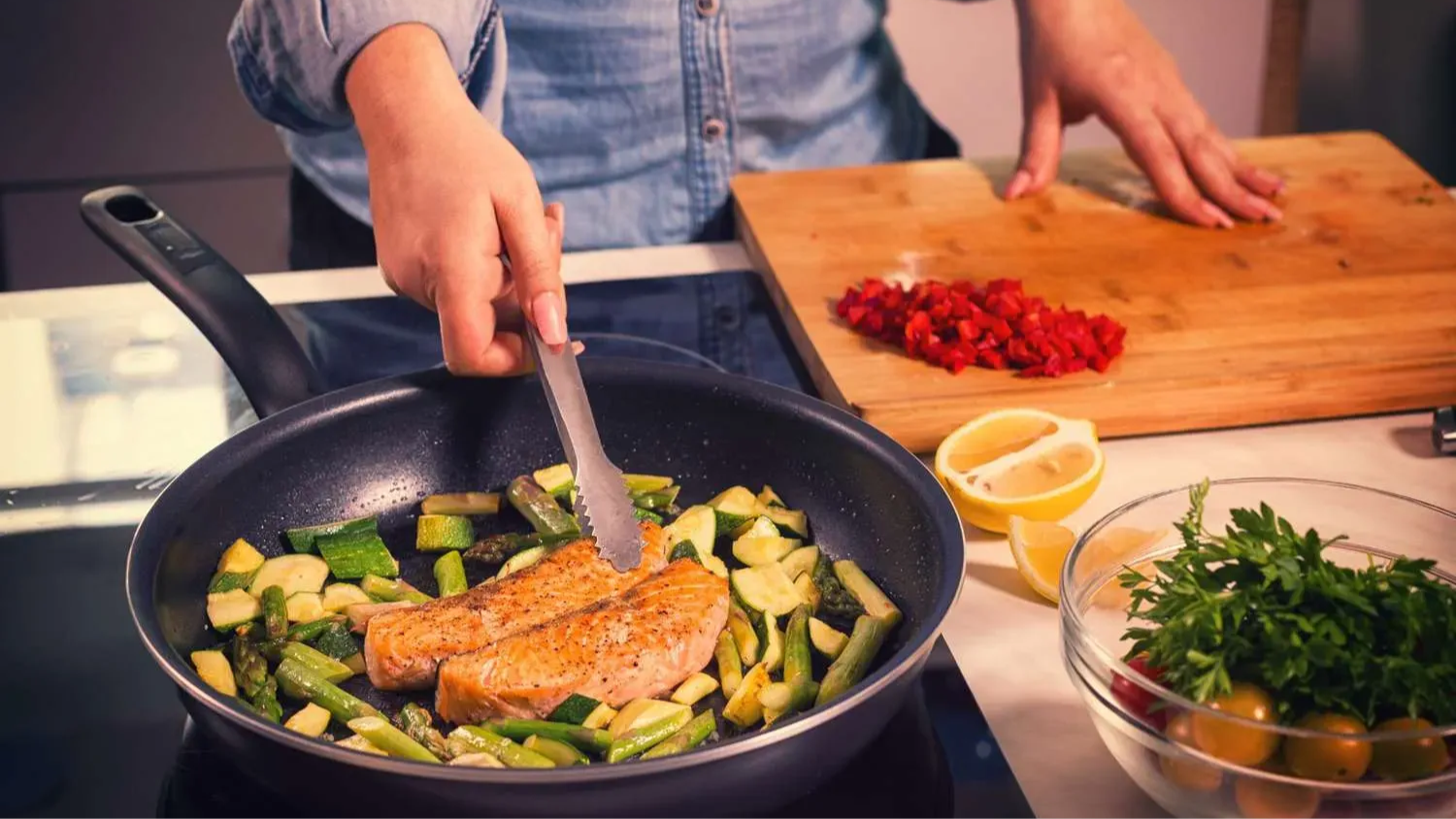
Elegir los utensilios de cocina en función del estilo de cocción
No todas las cocinas necesitan herramientas profesionales, pero entender las ventajas y desventajas mejora la toma de decisiones.
Comodidad frente a rendimiento
El antiadherente prioriza la comodidad. El acero inoxidable prioriza el control. El acero al carbono equilibra de diferentes maneras.
Una sartén no puede hacerlo todo bien
Las cocinas profesionales no dependen de un único tipo de utensilio de cocina. Utilizan un sistema de utensilios, cada uno optimizado para una función.
Conclusiones: Los chefs evitan las sartenes antiadherentes porque la cocina profesional es diferente
Los chefs no evitan los utensilios de cocina antiadherentes porque sean intrínsecamente “malos”. Lo evitan porque es no está diseñado para la realidad operativa de las cocinas profesionales.
Las principales diferencias son:
- Intensidad térmica
- Frecuencia de uso
- Requisitos de coherencia de las prestaciones
En ese entorno:
- El acero inoxidable se convierte en la norma estructural
- El acero al carbono se convierte en la alternativa
- El antiadherente sigue siendo una herramienta especializada
La selección de utensilios de cocina profesionales no es una cuestión de comodidad. Se trata de rendimiento repetible bajo presión.
Para los fabricantes y proveedores, ésta es también la razón por la que los sistemas de acero inoxidable siguen siendo la base de la producción de utensilios de cocina comerciales, respaldados por una ingeniería coherente, no por revestimientos superficiales.
Acerca de Oportunidades
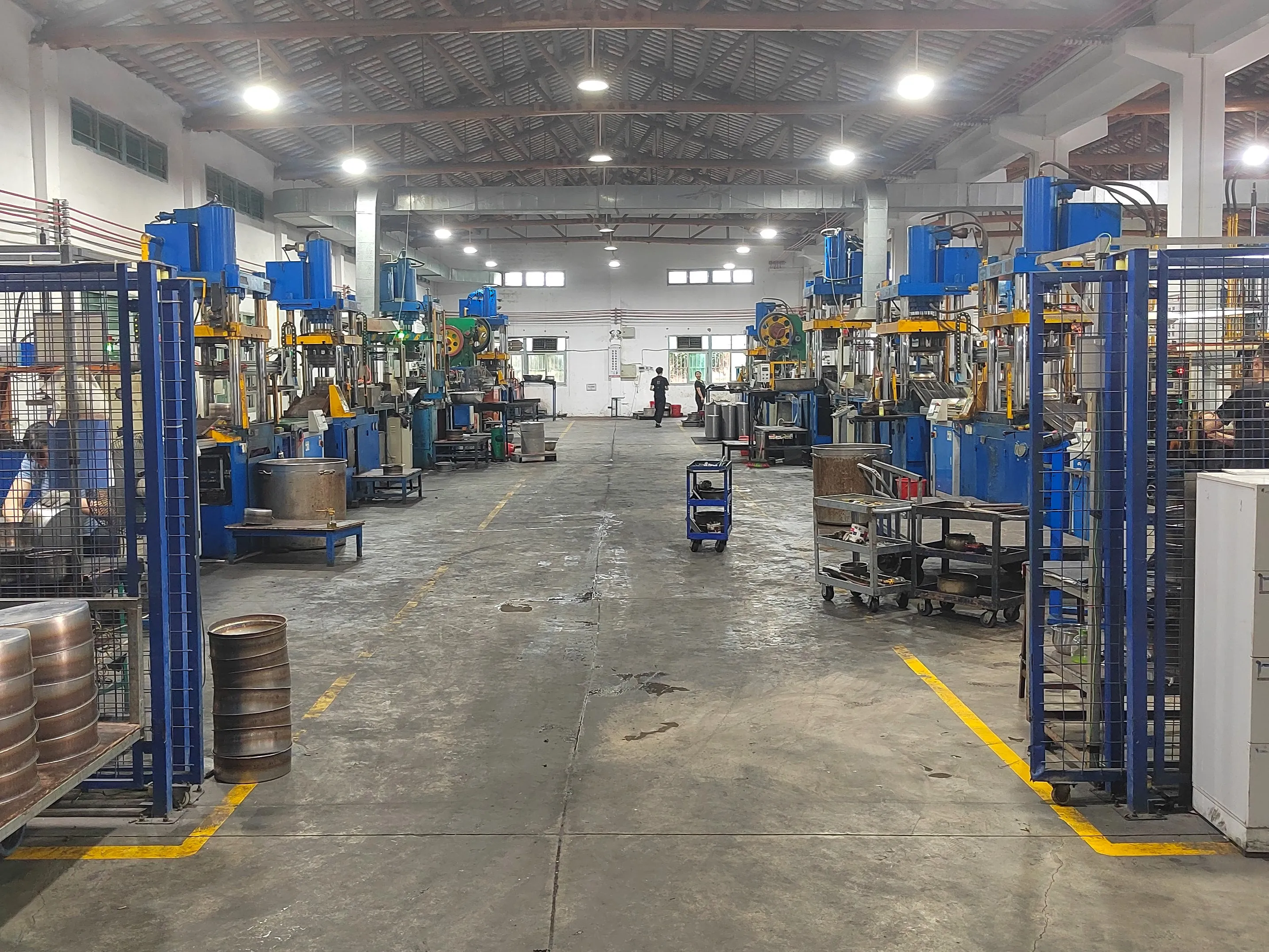
Como profesional mayorista de utensilios de cocina comerciales, Oportunidades se centra en suministrar productos de acero inoxidable estables y de alto rendimiento tanto para cocinas domésticas como profesionales. Al operar como proveedor directo de fábrica de utensilios de cocina, garantizamos un control de calidad constante, lotes de producción fiables y capacidad escalable para compradores B2B globales.
Nuestra venta al por mayor de utensilios de cocina cubiertas de la gama sartenes, cacerolas, y sistemas completos de utensilios de cocina diseñados para durar a altas temperaturas y frecuencias.
También ofrecemos Personalización de utensilios de cocina OEM/ODM, incluyendo la estructura, las especificaciones de los materiales y la marca. Como proveedor mayorista de confianza de utensilios de cocina, apoyamos las asociaciones a largo plazo con un suministro estable, seguridad alimentaria certificada y precisión de fabricación adaptada a los requisitos comerciales.