ES
ES  EN
EN  FR
FR  DE
DE  RU
RU  AR
AR  PT
PT  JA
JA  KO
KO 
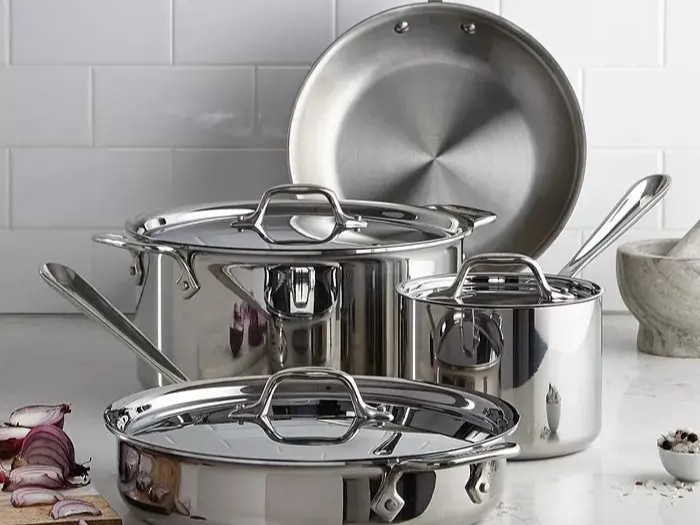
FAS-free cookware refers to cookware without intentionally added fluorinated surface chemistry, commonly known in regulatory terms as PFAS.
Public concern over FAS (fluorinated surface chemistry, scientifically classified as PFAS) has pushed FAS-free cookware into mainstream conversation. For buyers — both consumers and B2B purchasers — the question is practical: does choosing stainless steel actually reduce chemical risk, and what trade-offs does it create?
In this blog, Oportunidades, a fabricante de baterías de cocina de acero inoxidable, explains what “FAS-free” means, compares FAS-containing and FAS-free options, and outlines verification steps.
What “FAS” Means in Cookware
FAS refers to fluorinated chemicals used to create durable, low-friction, and stain-resistant surfaces. In cookware, the best-known application is PTFE (polytetrafluoroethylene) non-stick coatings — commonly marketed as “Teflon” or generic non-stick. Manufacturers may also use other fluoropolymers or surface treatments that involve FAS chemistry.
When a product is advertised as FAS-free cookware, the claim generally means no intentionally added fluorinated chemicals in the surface coating. It does not guarantee “chemical-free” cookware — it specifically addresses fluorinated polymers.
Why FAS Were Used — and Why Concerns Grew
FAS-based coatings delivered clear consumer benefits: excellent food release, easier cleaning, and lower oil cooking. These properties made PTFE-coated pans widely adopted.
Concerns emerged because many fluorinated compounds are environmentally persistent and have been associated with potential health risks under certain exposure conditions. Public attention has focused on two key risk scenarios:
- Overheating or damaged coatings: Scratched or overheated PTFE surfaces may degrade and release particles or gases. Misuse increases this risk.
- Environmental persistence: Fluorinated chemicals do not break down easily in water or soil, raising long-term environmental and disposal concerns.
Regulatory pressure in some regions has restricted certain FAS applications in food-contact materials, contributing to the rise of FAS-free cookware labeling.

Health Trade-Offs: FAS vs FAS-Free Materials
FAS-Coated Cookware
Pros:
- Excellent non-stick performance
- Minimal oil required
- Easy cleaning
Contras:
- Performance declines if the coating is scratched
- Overheating may create degradation byproducts
- Disposal and environmental persistence concerns

FAS-Free Cookware (Stainless Steel, Cast Iron, Carbon Steel, Non-Fluorinated Ceramic)
Pros:
- No intentional fluorinated coating
- High heat tolerance
- Long service life (for quality metal construction)
Contras:
- Not inherently non-stick (except seasoned cast iron)
- May require more oil or a cooking technique
- Some ceramic coatings wear faster over time
Important: choosing FAS-free cookware reduces fluoropolymer exposure risk, but it does not eliminate all material-related risks. Low-quality stainless steel or poor manufacturing can still lead to corrosion or contamination. Safety depends on material grade, production quality, and proper use.

Which Cookware Typically Contains FAS — and Which Does Not
Commonly Contains FAS
- Traditional PTFE non-stick pans
- Fluoropolymer-coated aluminum or steel cookware
- Certain “easy-clean” specialty coatings
Typically FAS-Free
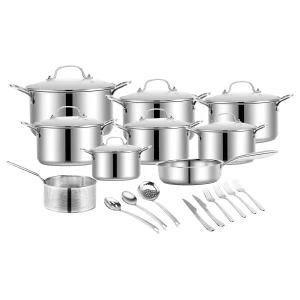
- Stainless steel cookware (uncoated or clad)
- Cast iron cookware
- Carbon steel cookware
- Fully clad stainless steel with no polymer layer
- Glass cookware
- Ceramic cookware without fluorinated coatings
If the goal is to avoid intentionally added fluoropolymers, stainless steel, and other uncoated metal cookware are straightforward options.
Is Stainless Steel Truly Safer?
From a FAS perspective: yes. Stainless steel cooking surfaces contain no fluorinated polymer layer, eliminating the exposure pathway associated with coating degradation.
From a broader safety perspective, it depends.
- Stainless steel tolerates high temperatures without coating breakdown.
- It does not emit polymer-related gases.
- It requires technique to prevent sticking.
- Minor metal ion migration can occur under extreme conditions, but reputable manufacturers provide grade documentation (304 or 316) and mill certificates to demonstrate food-contact compliance.
Conclusion: stainless steel reduces FAS-related concerns, but performance and overall safety still depend on quality, construction, and user practices.

How to Choose FAS-Free Cookware
For Consumers
- Select uncoated stainless steel, cast iron, or carbon steel for FAS avoidance.
- If non-stick performance is required without FAS, evaluate certified non-fluorinated ceramic coatings and follow care guidelines.
- Replace damaged non-stick cookware and avoid overheating coated pans.
For B2B Buyers
If a supplier claims FAS-free cookware, require:
- Material declaration — confirmation that no fluorinated polymer was intentionally added.
- Coating composition statement — full disclosure of surface chemistry and coating supplier.
- Third-party lab report — analytical results demonstrating non-detectable or compliant levels of fluorinated substances.
Additional controls:
- Request mill certificates for stainless grades.
- Conduct XRF or spectrometer verification of incoming materials.
- Require wear testing and migration testing for coated alternatives.
- Include inspection and acceptance clauses in purchase contracts.
Practical Guidance for Stainless Steel Use
- Preheat properly before adding oil.
- Use appropriate heat levels to prevent sticking or discoloration.
- For delicate foods, consider specialized cookware designed for low-stick performance.
- Replace cookware showing heavy corrosion or structural damage.
Environmental Considerations
Fluorinated chemicals are environmentally persistent. Switching to durable stainless steel reduces replacement frequency and eliminates fluorinated coating disposal. However, stainless production has its own environmental footprint. The sustainability advantage comes primarily from longevity and recyclability.
Veredicto final
If the primary objective is eliminating exposure to fluorinated cookware coatings, FAS-free cookware — particularly stainless steel — is the safer choice.
However, “safer” is contextual. Manufacturing quality, material grade, and proper usage remain critical.
Verification is essential. For procurement, require documentation and independent testing. For consumers, choose durable materials and realistic performance expectations.
Elegir FAS-free cookware can meaningfully reduce fluoropolymer-related risk — when supported by transparent documentation and informed decision-making.
Acerca de Chances
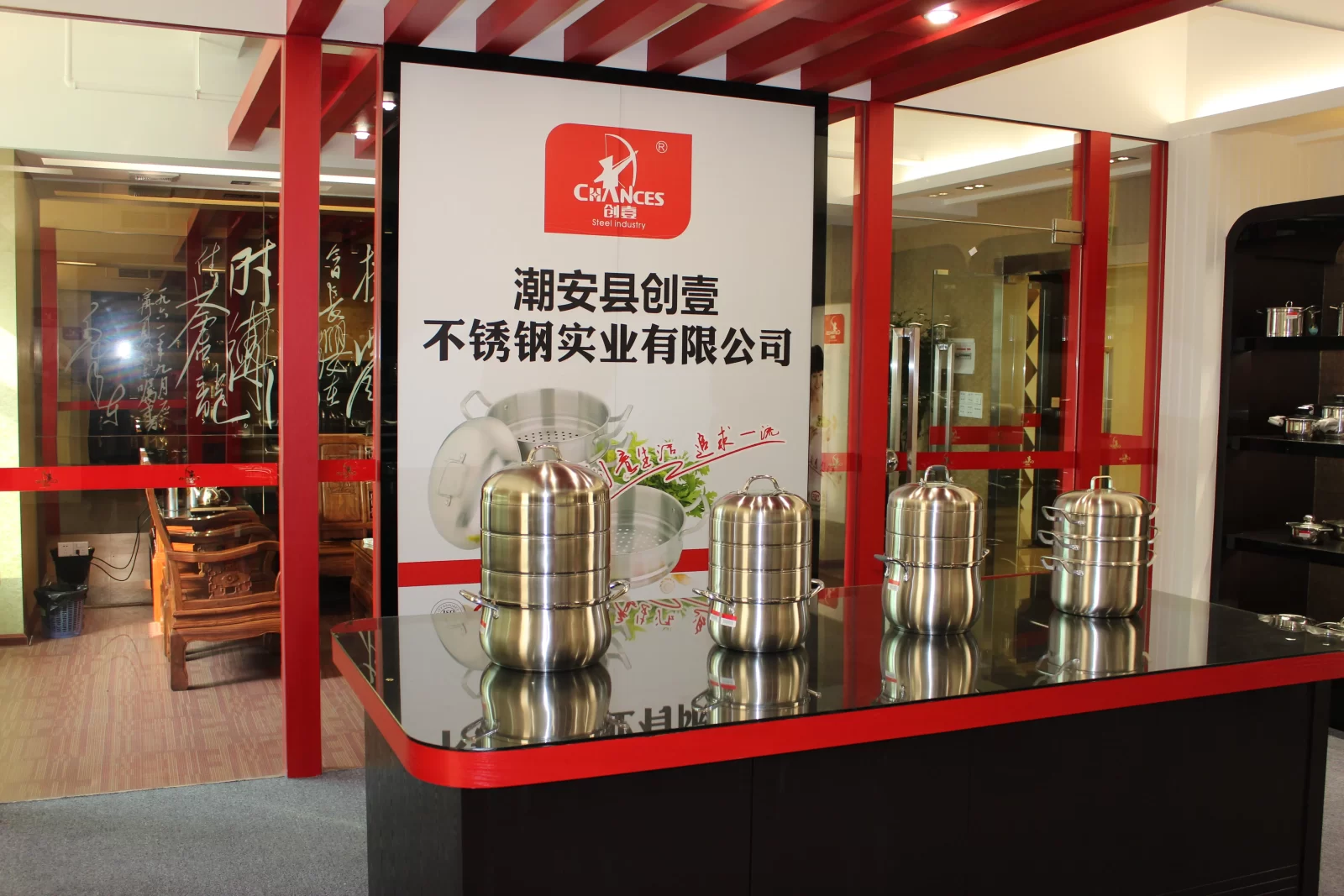
With over 20 years of expertise, Chances delivers high-grade venta al por mayor utensilios de cocina de acero inoxidable from China’s “Stainless Steel Kingdom.” Our full-chain production ensures top-tier quality and competitive pricing for global wholesalers, retailers, and distributors seeking reliable inventory.
Through our robust capabilities, we provide soluciones personalizadas en baterías de cocina de acero inoxidable. From precision mold development to specialized R&D support, our tailored manufacturing solutions transform your unique concepts into market-ready, innovative kitchenware.