FR
FR  EN
EN  DE
DE  RU
RU  AR
AR  ES
ES  PT
PT  JA
JA  KO
KO 
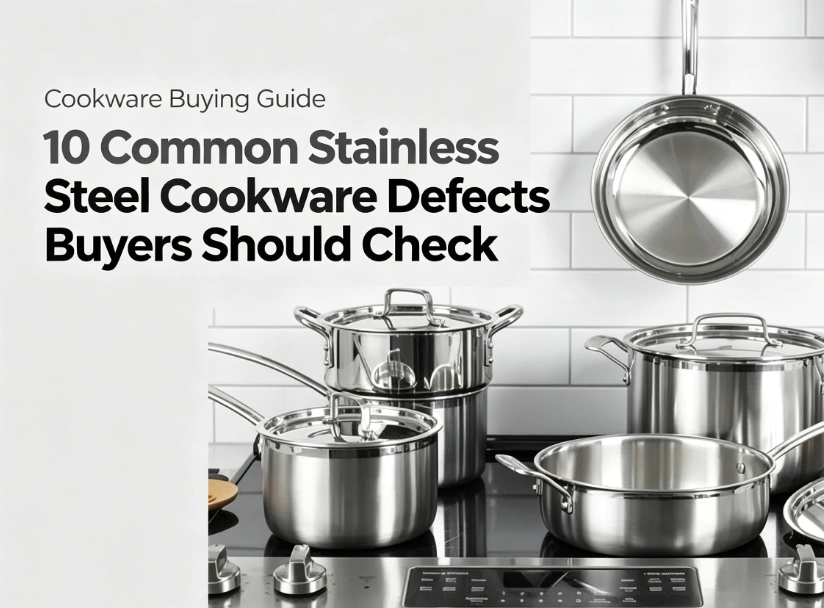
Parmi les défauts les plus courants des ustensiles de cuisine en acier inoxydable, on peut citer rayures, bosses, déformations, polissage irrégulier, soudures de mauvaise qualité, poignées mal fixées, écarts dimensionnels, problèmes de revêtement ou de surface, et dommages sur l'emballage. Pour les importateurs et les grossistes, le fait d'identifier ces défauts avant l'expédition permet de réduire les retours, les réclamations des clients et les coûts d'approvisionnement cachés. Les chances s'est spécialisé dans ustensiles de cuisine en acier inoxydable la fabrication, proposant une production intégrée, des solutions de personnalisation OEM/ODM et un contrôle qualité rigoureux pour les marchés internationaux.
Pourquoi l'inspection des ustensiles de cuisine est-elle importante pour les acheteurs B2B ?
Le coût lié à un défaut sur un ustensile de cuisine est généralement bien plus élevé après l'expédition qu'avant celle-ci.
Remarquez la différence :
Avant l'expédition :
Identifier le défaut → contacter l'usine → procéder à la remise en état → procéder à une nouvelle inspection → expédier
Après l'expédition :
Réclamation d'un client → retour ou remplacement → frais de transport supplémentaires → perte de chiffre d'affaires → atteinte à la réputation de la marque
C'est pourquoi tout programme sérieux d'achat d'ustensiles de cuisine devrait inclure un processus d'inspection systématique.
En ce qui concerne les équipements destinés à entrer en contact avec les aliments, la qualité est également liée à l'hygiène et à la facilité de nettoyage. La NSF précise que les normes relatives aux équipements alimentaires professionnels portent sur la sécurité des matériaux, la conception, la fabrication, la facilité de nettoyage et les performances des produits.
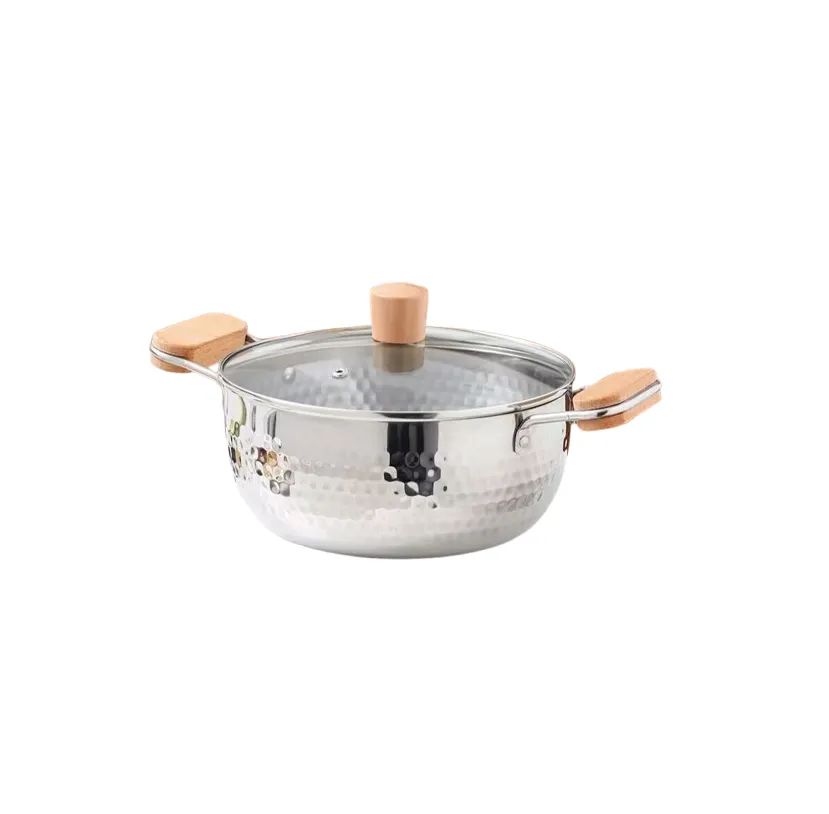
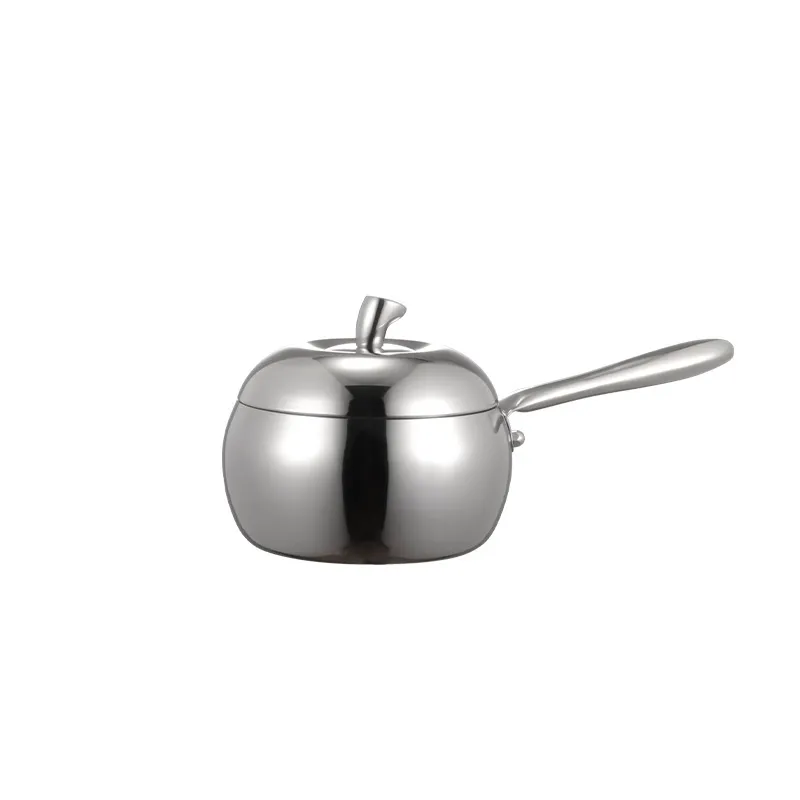
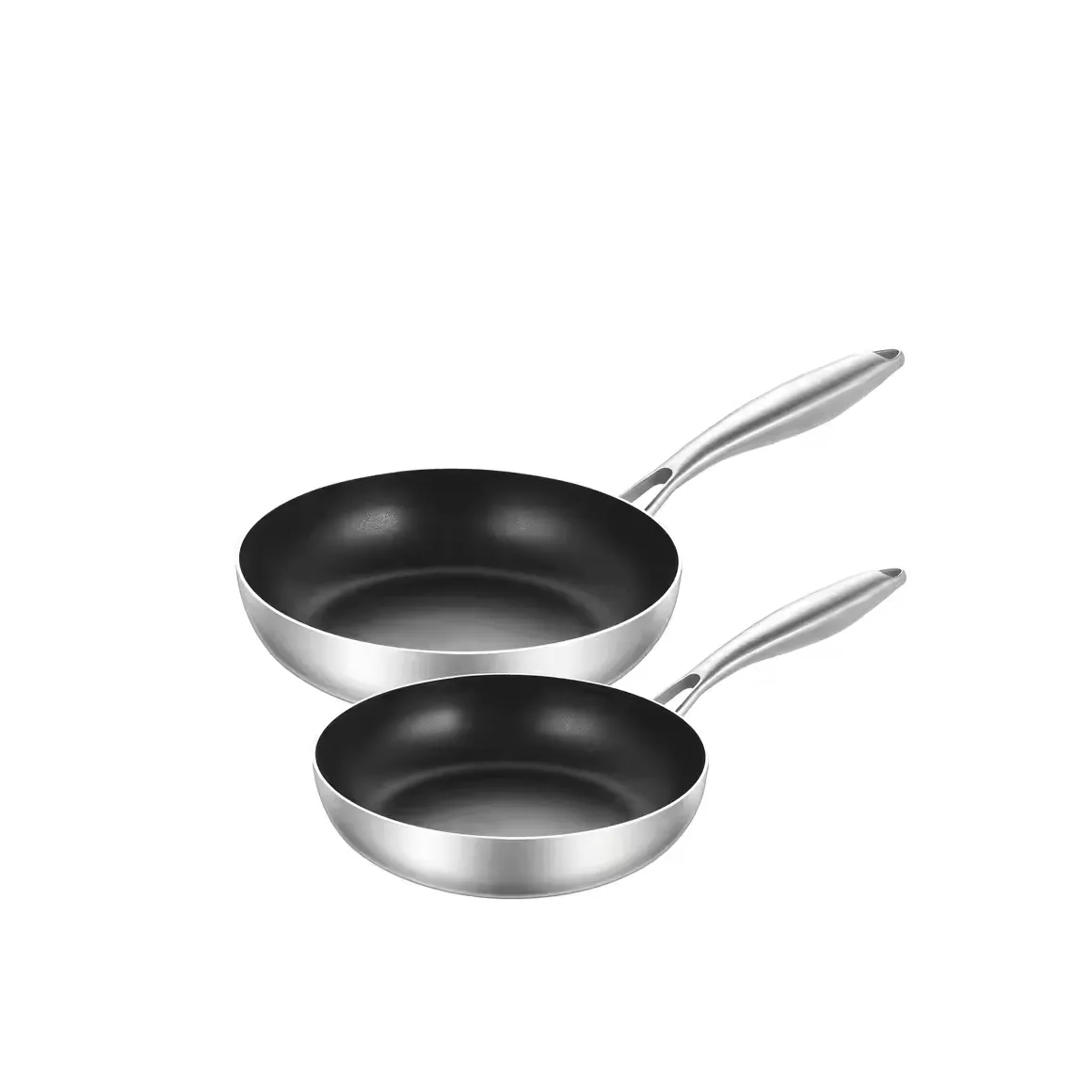
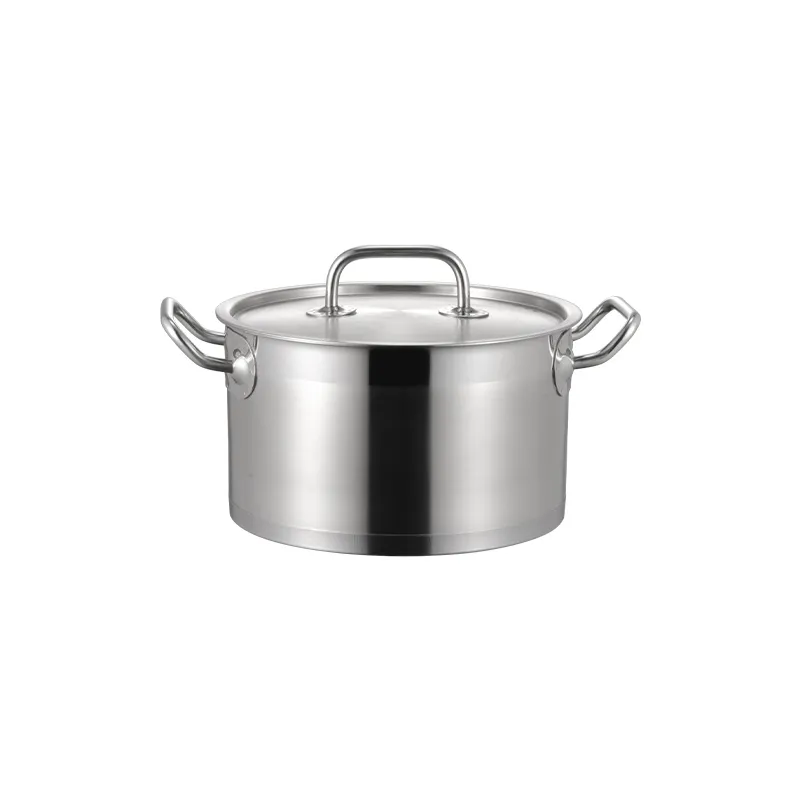
Les 10 défauts les plus courants des ustensiles de cuisine en acier inoxydable
1. Rayures superficielles et traces d'abrasion
Les égratignures comptent parmi les problèmes courants les plus faciles à résoudre ustensiles de cuisine en acier inoxydable défauts à identifier.
Ils peuvent survenir lors de :
- Estampillage
- Polissage
- Assemblée
- Manipulation
- Emballage
- Transport
Toutes les marques mineures n'ont pas la même importance. Une petite marque d'ordre esthétique sur l'emballage d'un produit commercial peut avoir des conséquences différentes de celles d'une rayure profonde sur une surface en contact avec les aliments.
Ce que les acheteurs doivent vérifier
Examinez le produit sous un éclairage suffisant et vérifiez les points suivants :
- Rayures profondes
- Traces de polissage linéaires
- Zones d'abrasion
- Gouges métalliques
- Texture de surface irrégulière
Pour ustensiles de cuisine haut de gamme, il convient de vérifier l'uniformité de la surface sur plusieurs échantillons plutôt que de se limiter à un seul.
2. Bosses et déformations
Des bosses peuvent apparaître lors du formage, de la manutention, de l'empilage ou du transport.
Parmi les lieux les plus courants, on peut citer :
- Corps de pots
- Parois en tôle
- Surfaces inférieures
- Couvercles
- Poignées
Une petite bosse peut n'être qu'un problème esthétique, mais une déformation importante peut nuire à l'ajustement du couvercle ou empêcher le faitout de reposer correctement sur une plaque de cuisson.
Conseil pour l'inspection immobilière par l'acheteur
Placez l'ustensile de cuisine sur une surface plane de référence et faites-le tourner doucement. Vérifiez si le corps reste stable sans osciller de manière excessive.
3. Fonds déformés ou irréguliers
Un fond irrégulier est l'un des problèmes courants les plus importants ustensiles de cuisine en acier inoxydable des défauts, car cela peut avoir une incidence directe sur les performances de cuisson.
Parmi les causes possibles, on peut citer :
- Formage irrégulier
- Contrainte thermique excessive
- Soudure incorrecte
- Épaisseur irrégulière du matériau
- Paramètres de traitement incorrects
Pour les plaques à induction et les plaques électriques, il est particulièrement important que le fond des récipients soit stable et suffisamment plat.
Comment procéder à une inspection
Utilisez une surface plane étalonnée ou un équipement de mesure adapté pour vérifier :
- Planéité du fond
- Diamètre de la base
- Déformation centrale
- Zone de contact
Ne vous fiez pas uniquement à l'inspection visuelle.
4. Mauvaise qualité de soudure
Le soudage revêt une importance particulière pour les ustensiles de cuisine dotés de poignées, de supports ou d'autres éléments fixés.
Les soudures de mauvaise qualité peuvent se présenter sous la forme :
- Fissures
- Lacunes
- Porosité
- Cordons de soudure irréguliers
- Grincement excessif
- Points de fixation fragiles
Un produit visuellement attrayant peut tout de même présenter des problèmes structurels si le processus de soudage n'est pas réalisé de manière homogène.
Ce que les acheteurs doivent faire
Vérifiez la connexion entre :
- Poignée et corps
- Support et pot
- Composants du couvercle
- Autres accessoires soudés
Le cas échéant, fabricants doivent effectuer des essais de résistance ou des essais fonctionnels conformément au cahier des charges convenu pour le produit.
5. Poignées desserrées ou mal alignées
Une poignée doit donner une sensation de stabilité et être correctement alignée.
Parmi les problèmes courants, on peut citer :
- Poignées mal fixées
- Mauvais positionnement de la poignée
- Écarts inégaux
- Mauvais rivetage
- Soudures défectueuses
- Arêtes vives au niveau des points de fixation
Ces aspects revêtent une importance particulière, car la poignée a une incidence directe sur le contrôle et la sécurité de l'utilisateur.
Test fonctionnel simple
Tenez l'ustensile de cuisine par la poignée et exercez une force manuelle raisonnable dans différentes directions. La poignée doit rester stable sans bouger de manière excessive.
Pour les commandes de grande envergure, les acheteurs doivent définir à l'avance la méthode d'inspection et les critères d'acceptation, plutôt que de se fier à un jugement subjectif.
6. Polissage irrégulier ou inhomogène
Le polissage a une forte influence sur la valeur perçue de ustensiles de cuisine en acier inoxydable.
Parmi les problèmes courants, on peut citer :
- Surfaces de miroirs ternes
- Brossage irrégulier
- Traces de polissage visibles
- Décoloration
- Zones trop polies
- Finition inégale d'un lot à l'autre
Ces défauts n'affectent peut-être pas les fonctionnalités de base, mais ils peuvent avoir un impact significatif sur la présentation en magasin.
Cela revêt une importance particulière pour les marques de distributeur qui commercialisent des ustensiles de cuisine sur les segments haut de gamme ou milieu de gamme.
Conseil à l'acheteur
Si le cahier des charges de votre produit prévoit une finition brossée, satinée ou miroir, veuillez joindre des échantillons de référence ou des échantillons « golden » validés au contrat d'achat.
7. Arêtes vives et mauvais lissage des arêtes
Les bords des ustensiles de cuisine doivent être soigneusement façonnés et finis.
Les défauts potentiels sont les suivants :
- Jantes à arêtes vives
- Impatiences
- Bords roulés irréguliers
- Bavures
- Épaisseur irrégulière de la jante
Les arêtes vives peuvent présenter des risques lors de la manipulation et nuire à l'expérience utilisateur.
Les recommandations de la FDA relatives aux équipements alimentaires soulignent que les surfaces en contact avec les aliments doivent être résistantes à la corrosion, durables, lisses, faciles à nettoyer et dépourvues de joints apparents.
Par conséquent, la qualité des bords doit être considérée à la fois comme un enjeu fonctionnel et comme une question de contrôle qualité.
8. Écarts dimensionnels
Les acheteurs d'ustensiles de cuisine précisent souvent avec exactitude :
- Diamètre
- Hauteur
- Capacité
- Épaisseur
- Longueur du manche
- Dimensions du couvercle
- Diamètre de la base
Si les cotes de fabrication varient trop, les composants risquent de ne plus s'emboîter correctement.
Par exemple, un couvercle légèrement trop grand ou trop petit peut entraîner :
- Mauvaise étanchéité
- Coupe ample
- Opération difficile
- Aspect irrégulier
Inspection recommandée
Utilisez des instruments de mesure étalonnés pour vérifier les cotes critiques par rapport au dessin technique approuvé ou au cahier des charges du produit.
N'acceptez pas une indication du type “ à peu près de la même taille ” lorsque le produit exige une cohérence dimensionnelle.
9. Problèmes d'ajustement du couvercle et des composants
Pour batteries de cuisine, la compatibilité entre les différents composants est essentielle.
Parmi les problèmes courants, on peut citer :
- Le couvercle ne se ferme pas correctement
- La poignée du couvercle est desserrée
- La sortie de vapeur n'est pas correctement positionnée
- La crépine n'est pas bien alignée
- Les dimensions d'empilage ne sont pas cohérentes
Ces problèmes sont particulièrement fréquents lorsque plusieurs composants sont fabriqués séparément.
Ce que les acheteurs doivent vérifier
Dans le cadre de l'inspection, assemblez le produit complet exactement comme le ferait le client.
Vérifier :
- Le couvercle s'adapte-t-il ?
- Est-ce qu'il s'ouvre et se ferme sans à-coups ?
- Les poignées sont-elles correctement alignées ?
- Les accessoires sont-ils compatibles ?
- Le produit reste-t-il stable ?
10. Dommages liés à l'emballage et au transport
Ce n'est pas toujours courant ustensiles de cuisine en acier inoxydable les défauts trouvent leur origine sur la chaîne de production.
Certains défauts apparaissent après la fabrication.
Parmi les problèmes courants liés aux transports, on peut citer :
- Bosses
- Rayures
- Poignées déformées
- Couvercles endommagés
- Abrasion de surface
- Compression du carton
C'est pourquoi l'emballage doit être considéré comme faisant partie intégrante de la qualité du produit fini.
Liste de contrôle pour l'inspection des emballages
Vérifier :
- Protection individuelle
- Manchons de protection
- Séparateurs intérieurs
- Résistance du carton
- Empilabilité
- Contact entre produits
- Marques d'expédition
- Dimensions du carton
Un bon fabricant d'ustensiles de cuisine Il convient de prendre en compte à la fois la qualité de fabrication et la sécurité logistique.
Pourquoi deux ustensiles de cuisine présentant les mêmes caractéristiques techniques peuvent-ils offrir des performances différentes ?
L'un des éléments les plus importants à retenir pour les acheteurs est que des caractéristiques techniques identiques ne garantissent pas nécessairement des performances identiques.
Deux usines peuvent établir un devis :
Ustensiles de cuisine en acier inoxydable + même diamètre + même épaisseur + même nuance
Pourtant, les produits finis peuvent tout de même présenter des différences.
Pourquoi ?
1. Homogénéité des matières premières
La composition chimique, la tolérance d'épaisseur et la qualité du matériau peuvent influencer le formage, la résistance à la corrosion et la durabilité.
2. Précision de fabrication
Les différentes techniques de formage, d'estampage, de soudage et de polissage permettent d'obtenir différents niveaux de régularité dimensionnelle.
3. Contrôle des processus
La stabilité des paramètres de production contribue à réduire les variations d'un lot à l'autre.
4. Contrôle qualité
Un fournisseur qui met en œuvre un contrôle en cours de fabrication complet a plus de chances de détecter les défauts avant que les produits n'atteignent la phase d'emballage.
5. Emballage
Même un produit de fabrication irréprochable peut être endommagé s'il n'est pas correctement protégé pendant le transport.
La leçon essentielle à retenir pour les acheteurs est simple : il faut comparer le processus de fabrication, et pas seulement les caractéristiques techniques du produit.
Comment inspecter les ustensiles de cuisine en acier inoxydable avant leur expédition
Une inspection pratique avant expédition peut être divisée en cinq étapes.
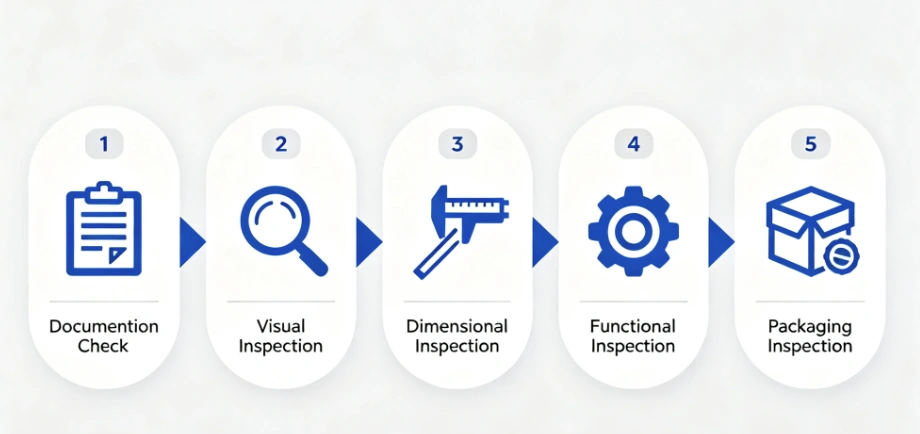
Étape 1 : Vérification des documents
Vérifier :
- Bon de commande
- Dessins techniques
- Spécifications des matériaux
- Échantillon approuvé
- Exigences en matière d'emballage
- Exigences en matière d'étiquetage
Étape 2 : Inspection visuelle
Vérifiez les points suivants :
- Rayures
- Bosses
- Décoloration
- Irrégularités de surface
- Arêtes vives
Étape 3 : Contrôle dimensionnel
Mesure :
- Diamètre
- Hauteur
- Épaisseur
- Capacité
- Dimensions de la base
Étape 4 : Contrôle fonctionnel
Test :
- Stabilité de la poignée
- Ajustement du couvercle
- Compatibilité des composants
- Stabilité du produit
- Assemblage de base
Étape 5 : Contrôle des emballages
Vérifier :
- Protection individuelle
- Qualité du carton
- Étiquettes
- Quantité
- Marques d'expédition
Cette approche en cinq étapes permet aux acheteurs d'identifier plus facilement les points communs ustensiles de cuisine en acier inoxydable les défauts de manière systématique.
Qualité des fournisseurs ou contrôle des produits : quel est le plus important ?
La réponse est : les deux.
Une inspection finale permet de détecter les défauts, mais c'est la gestion de la qualité chez le fournisseur qui détermine la fréquence à laquelle ces défauts apparaissent.
Un bon fournisseur doit posséder
- Contrôle des matières entrantes
- Procédures de production normalisées
- Contrôles qualité en cours de fabrication
- Contrôle final
- Traçabilité
- Rétention des échantillons
- Procédures relatives aux mesures correctives
Cela permet de mettre en place un système de qualité préventif, plutôt que de se contenter de détecter les problèmes après la production.
Avantages et inconvénients de l'inspection avant expédition
Pour
Réduit les risques liés à la qualité
Les défauts peuvent être détectés avant que les marchandises ne quittent l'usine.
Protège la réputation de la marque
Une qualité constante des ustensiles de cuisine contribue à réduire les réclamations des clients.
Favorise la responsabilisation des fournisseurs
Des critères d'inspection clairs fournissent aux acheteurs des éléments objectifs lorsqu'ils demandent la mise en œuvre de mesures correctives.
Réduit les coûts cachés
La remise en état des produits avant leur expédition revient généralement moins cher que la gestion des retours internationaux.
Cons
Ajoute le coût de l'inspection
Les services d'inspection assurés par des tiers entraînent des coûts supplémentaires liés aux achats.
Nécessite une planification
Les dates d'inspection doivent être coordonnées avec les calendriers de production et d'expédition.
L'échantillonnage n'est pas une inspection 100%
L'échantillonnage aléatoire fournit des données fiables, mais ne permet pas de garantir que chaque unité soit exempte de défauts.
Comment identifier un fabricant fiable d'ustensiles de cuisine en acier inoxydable
Lorsqu'ils s'approvisionnent en ustensiles de cuisine, les acheteurs doivent évaluer le fournisseur avant d'examiner le devis.
1. Vérifier l'expérience en matière de fabrication
Demandez depuis combien de temps le fabricant produit des ustensiles de cuisine en acier inoxydable et quels sont les marchés sur lesquels il est présent.
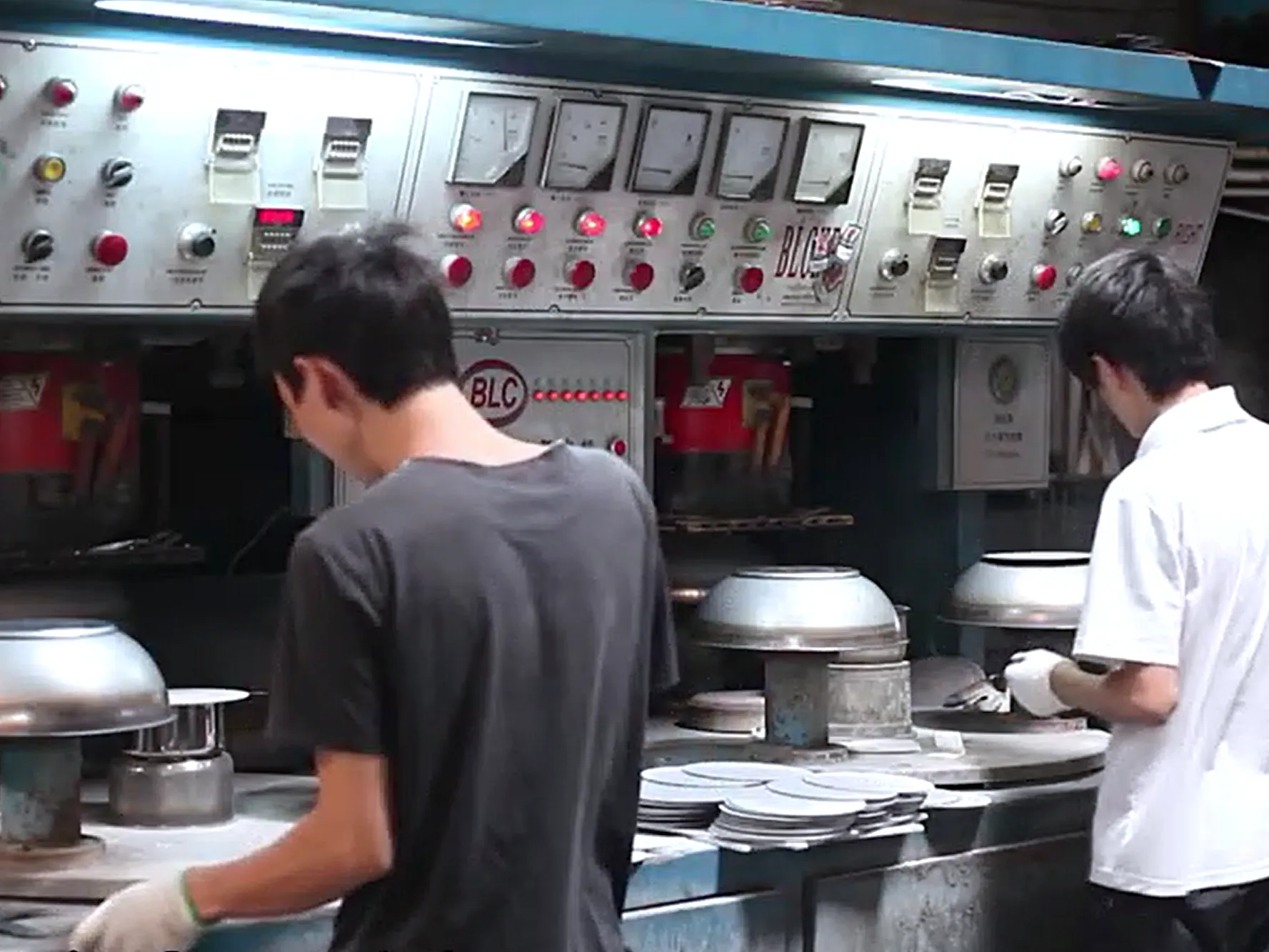
2. Évaluer la capacité de production
Recherchez :
- Équipements de formage
- Matériel de soudage
- Installations de polissage
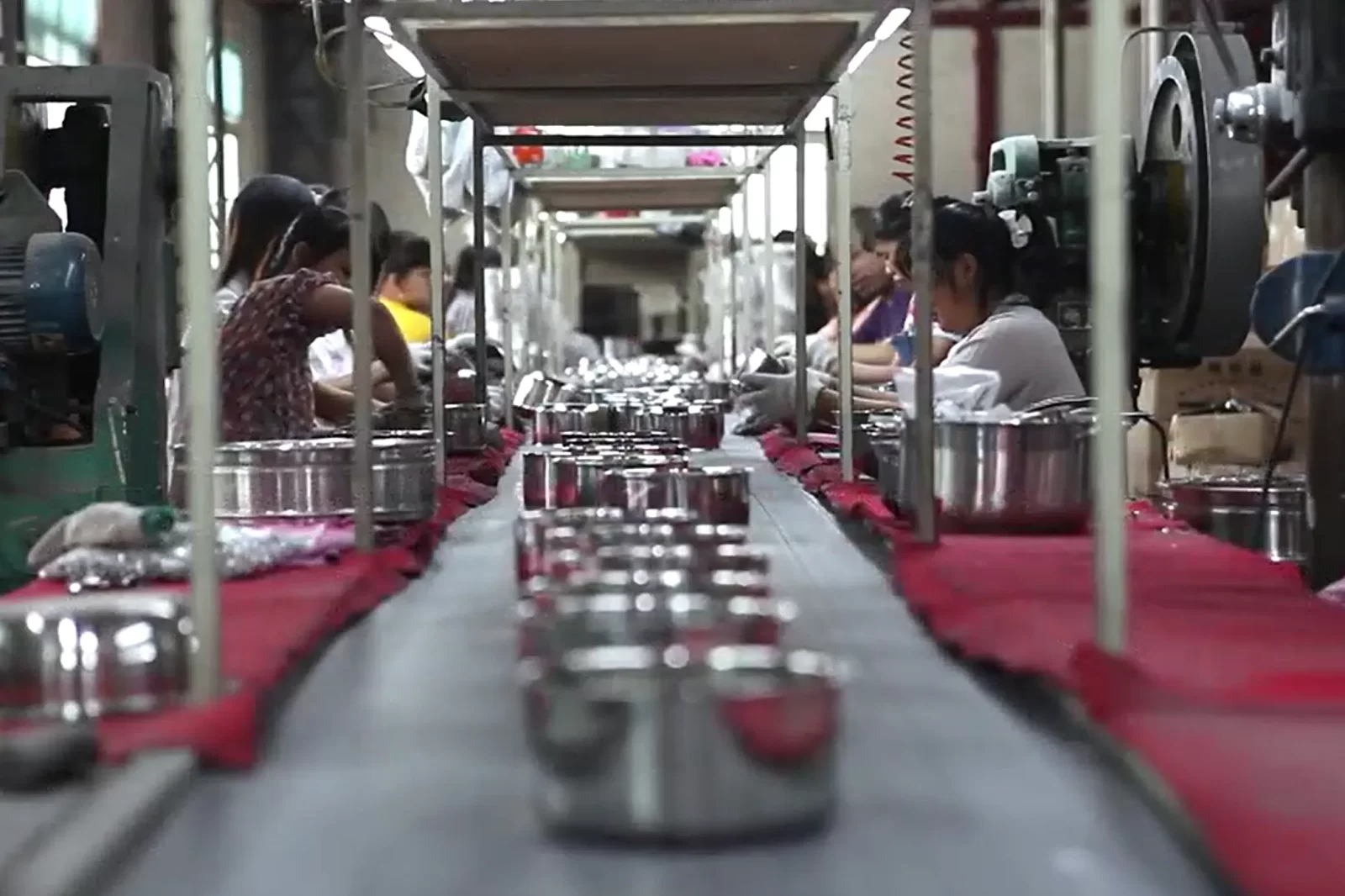
- Chaînes de montage
- Équipements de contrôle qualité
3. Renseignez-vous sur les capacités OEM/ODM
Si vous avez besoin de produits sur mesure, vérifiez si le fournisseur est en mesure de prendre en charge :
- Conception de produits
- Développement des moisissures
- Personnalisation du logo
- Emballage
- Production en série
4. Procédures de contrôle de la qualité
Demandez au fabricant de vous expliquer comment sont contrôlés les matériaux et les produits finis.
5. Demander des échantillons
Les échantillons permettent aux acheteurs d'évaluer :
- Toucher du tissu
- Poids
- Finition de surface
- La construction
- Fonctionnalité
6. Vérifier la cohérence de la production
Un bon échantillon ne suffit pas. Les acheteurs doivent s'assurer que la production en série respecte les mêmes spécifications.
Liste de contrôle recommandée pour les acheteurs
Avant d'approuver un envoi en vrac, les acheteurs peuvent utiliser cette liste de contrôle simplifiée :
| Zone d'inspection | Question clé |
|---|---|
| Matériau | Le produit est-il conforme aux spécifications convenues concernant l'acier inoxydable ? |
| Épaisseur | L'épaisseur du matériau se situe-t-elle dans les limites de tolérance convenues ? |
| Surface | Les rayures, les bosses et les défauts de polissage sont-ils contrôlés ? |
| Soudage | Tous les raccords sont-ils bien fixés et correctement finis ? |
| Poignées | Les poignées sont-elles stables et correctement alignées ? |
| Bords | Les jantes sont-elles lisses et exemptes de bavures dangereuses ? |
| Dimensions | Les produits sont-ils conformes aux plans approuvés ? |
| Couvercles | Les couvercles s'adaptent-ils correctement et fonctionnent-ils correctement ? |
| Fonction | Les ustensiles de cuisine restent-ils stables pendant leur utilisation ? |
| Emballage | Le produit est-il correctement protégé pour l'exportation ? |
| Quantité | La quantité expédiée correspond-elle à celle indiquée dans le bon de commande ? |
| Étiquetage | Les mentions figurant sur le produit et l'emballage sont-elles correctes ? |
Cette liste de contrôle peut être adaptée en fonction du type de produit et de l'accord qualité conclu avec l'acheteur.
FAQ
Q1 : Quels sont les défauts les plus courants des ustensiles de cuisine en acier inoxydable ?
Parmi les problèmes les plus courants, on peut citer les rayures, les bosses, les déformations, les soudures de mauvaise qualité, les poignées desserrées, un polissage irrégulier, les arêtes vives, les écarts dimensionnels, un mauvais ajustement des composants et les dommages liés au transport.
Q2 : Les petites rayures sont-elles acceptables ?
Cela dépend de la norme de qualité convenue et du positionnement du produit. Les acheteurs doivent définir les limites esthétiques acceptables avant de lancer la production en série.
Q3 : Comment les acheteurs peuvent-ils repérer les ustensiles de cuisine déformés ?
Placez l'ustensile de cuisine sur une surface plane de référence et vérifiez s'il bascule ou si son contact est irrégulier. Pour obtenir des mesures précises, utilisez un équipement de mesure adapté.
Q4 : Les acheteurs doivent-ils examiner chaque pièce ?
Pour les commandes de grand volume, on recourt généralement à l'échantillonnage statistique. Le niveau d'échantillonnage approprié doit être convenu entre l'acheteur, le fournisseur et l'organisme de contrôle, en fonction du risque lié au produit et des exigences contractuelles.
Q5 : Pourquoi les poignées des ustensiles de cuisine en acier inoxydable se desserrent-elles ?
Parmi les causes possibles, on peut citer une soudure insuffisante, un rivetage de mauvaise qualité, des composants fragiles, un assemblage incorrect ou un contrôle des processus inadéquat.
Q6 : Les ustensiles de cuisine en acier inoxydable sont-ils automatiquement sans danger pour les aliments ?
Pas nécessairement. La sécurité en matière de contact alimentaire dépend de la composition du matériau, de son procédé de fabrication, du traitement de surface, de l'usage prévu et de la réglementation applicable. Les acheteurs doivent vérifier les exigences en vigueur sur leur marché cible.
Conclusion
Le commun ustensiles de cuisine en acier inoxydable Les défauts abordés dans ce guide peuvent sembler anodins, mais même un petit problème de fabrication peut entraîner des coûts élevés lorsqu'il se multiplie sur des milliers d'unités.
Pour les acheteurs B2B, la meilleure stratégie consiste à définir des spécifications claires avant la production, à évaluer les capacités du fabricant, à effectuer des contrôles qualité en cours de fabrication et à réaliser une inspection structurée avant expédition.
Plus important encore, la qualité ne doit pas être considérée comme une simple étape d'inspection finale. La qualité irréprochable de nos ustensiles de cuisine est garantie tout au long du processus de fabrication, depuis l'approvisionnement en matières premières et le formage jusqu'au soudage, au polissage, à l'assemblage, au contrôle qualité et à l'emballage pour l'exportation.
En choisissant un fabricant doté d'un contrôle rigoureux des processus et d'un système de gestion de la qualité transparent, les acheteurs peuvent réduire les taux de défauts, préserver la réputation de leur marque et mettre en place une chaîne d'approvisionnement plus stable.
Faites confiance à Chances pour des ustensiles de cuisine en acier inoxydable fiables
Fondée en 1996 à Caitang, près de Chaozhou — surnommée le “ royaume de l'acier inoxydable ” de Chine —,Le hasards possède plus de 20 ans d'expérience dans la fabrication et la vente en gros ustensiles de cuisine en acier inoxydable.
Nos capacités de production intégrées couvrent l'ensemble du processus, depuis la fabrication des matières premières jusqu'à l'assemblage du produit fini. Cela nous permet d'exercer un meilleur contrôle sur l'efficacité de la production, l'uniformité des produits et la gestion de la qualité.
Nous accompagnons des clients en Amérique du Sud, en Asie du Sud-Est, au Moyen-Orient, en Afrique, en Europe et aux États-Unis, en proposant des solutions OEM/ODM flexibles aux importateurs, grossistes, distributeurs, détaillants et marques.
Du développement des produits et de la personnalisation des moules à la production en série et au contrôle qualité final, Les chances s'attache à proposer des ustensiles de cuisine qui répondent aux spécifications convenues et aux attentes du marché.
Si vous vous approvisionnez en ustensiles de cuisine en acier inoxydable et que vous souhaitez limiter les risques liés à la qualité avant l'expédition, contactez Les chances dès aujourd'hui. Discutez avec notre équipe des spécifications de vos produits, de vos exigences en matière d'OEM/ODM et de vos normes de contrôle qualité afin de mettre en place un partenariat d'approvisionnement fiable et durable.
-

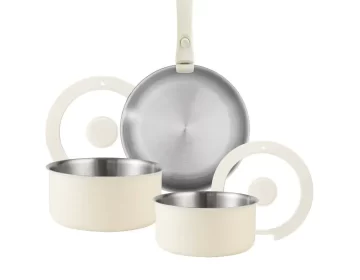
Wholesale Stainless Steel Tri Ply Cookware Set With Removable Handles (Ensemble d'ustensiles de cuisine triples en acier inoxydable avec poignées amovibles)
-
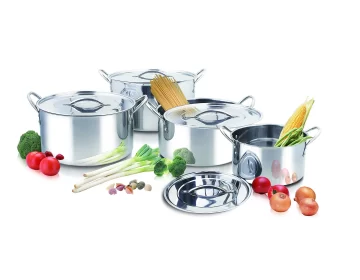
Wholesale Stainless Steel Stock Pot with Lid Storage Pot Set 8 Pcs for Kitchen Cooking (marmite en acier inoxydable avec couvercle pour la cuisine)
-
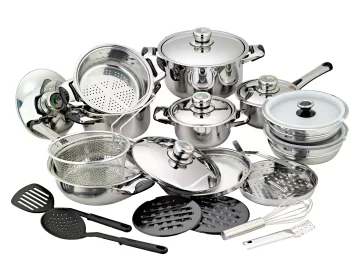
Ensemble de batterie de cuisine en acier inoxydable 27 pièces avec poignée papillon et couvercle en acier
-
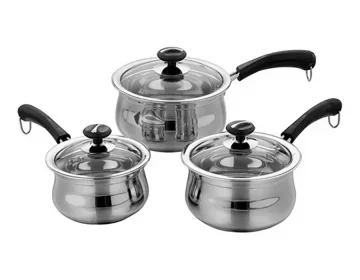
Wholesale Saucepan Set Stainless Steel with Korean Style 6 Piece Set (Ensemble de casseroles en acier inoxydable avec style coréen)