DE
DE  EN
EN  FR
FR  RU
RU  AR
AR  ES
ES  PT
PT  JA
JA  KO
KO 

Wenn Ingenieure, Köche und Einkäufer über die Leistung einer Pfanne sprechen, meinen sie oft nur eines: wie sich die Wärme durch das Metall verteilt. Das Geheimnis liegt in der Konstruktion – insbesondere im Boden.
In diesem Blog, Chances, ein professionelle Großhandel Kochgeschirr Hersteller, erläutert die beiden gängigsten Ansätze für modernes Kochgeschirr aus Metall: aufprallgebunden Unterteile und vollständig verkleidet Körper. Dabei konzentrieren wir uns auf praktische Kompromisse, damit Beschaffungsteams, Produktmanager und ambitionierte Hobbyköche fundierte Entscheidungen treffen können. Technologie für Kochgeschirr-Böden.
Warum die Technologie des Kochgeschirrbodens wichtig ist
Die auf eine Pfanne einwirkende Hitze muss sich gleichmäßig und vorhersehbar verteilen. Ein schlecht konstruierter Boden führt zu Hot Spots, ungleichmäßiger Bräunung und frustrierenden Temperaturschwankungen. Der Begriff Technologie für Kochgeschirr-Böden beschreibt, wie Hersteller Metallschichten (Edelstahl, Aluminium, Kupfer) an der Basis und, im Falle von vollständig plattiertem Kochgeschirr, auch an den Seitenwänden miteinander verbinden. Der Unterschied ist nicht nur theoretischer Natur – er wirkt sich auch auf die Aufheizgeschwindigkeit, den Energieverbrauch, die Haltbarkeit und die Kosten aus.
Was ist die Impact Bonded Cookware Bottom Technology?
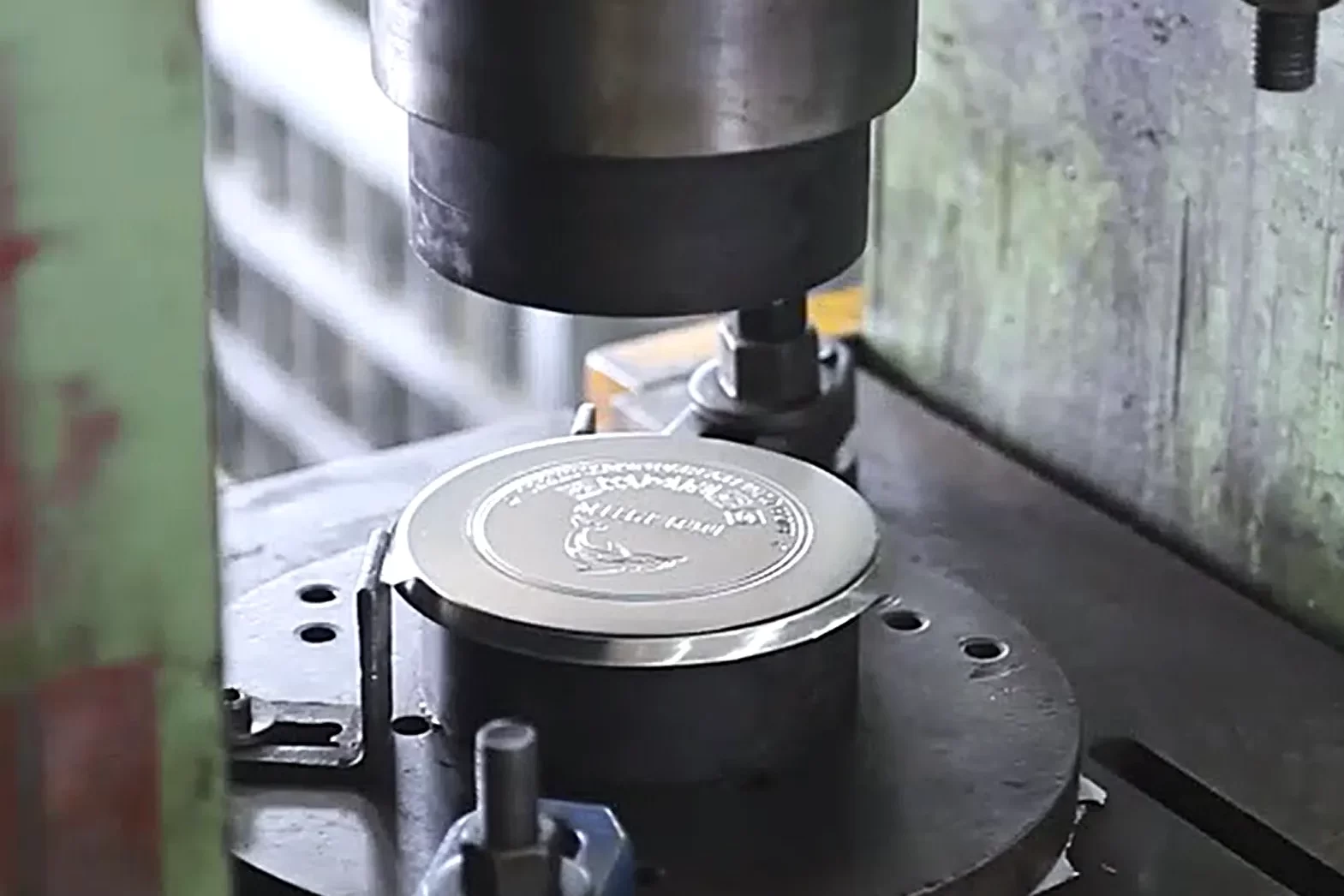
Bei der Impact-Bonded-Technologie wird eine Schicht aus wärmeleitendem Metall (in der Regel Aluminium) auf die Unterseite einer Edelstahlschale mechanisch aufgebracht. Dabei wird eine Metallscheibe auf den Boden der Pfanne gepresst oder geschweißt – daher der Name “Impact Bonded”. Das wesentliche Merkmal besteht darin, dass das wärmeleitende Material nur im Boden konzentriert ist, während die Seitenwände aus einlagigem Edelstahl bestehen.

Profis
- Geringere Materialkosten, da weniger Aluminium verwendet wird.
- Gute Aufheizgeschwindigkeit der Kochfläche der Pfanne.
- Einfacherer Fertigungsprozess für viele Fabriken.
Nachteile
- Die Wärme verteilt sich hauptsächlich über den Boden – die Seitenwandheizung hinkt hinterher.
- Erhöhtes Risiko von Hotspots in der Nähe des Zentrums, wenn die leitfähige Schicht dünn ist.
- Potenzial für Delamination unter starker thermischer Belastung über längere Zeiträume.
Gängige gewerbliche Verwendung: preisgünstiges bis mittelpreisiges Kochgeschirr, Kochgeschirr, bei dem die Wandheizung weniger wichtig ist (z. B. Bratpfannen).
Was ist die Technologie für vollständig ummantelte Kochgeschirr-Böden?
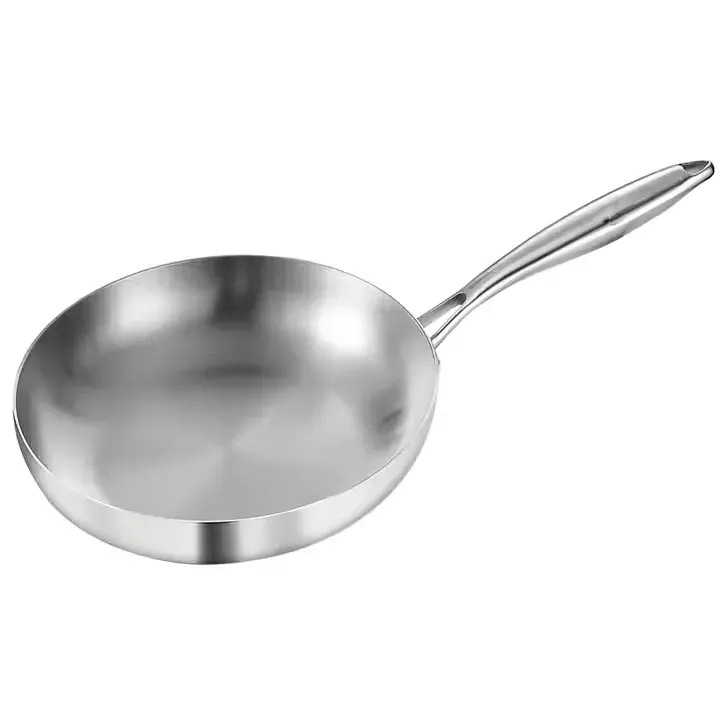
Bei der Vollmantel-Technologie (oder Full-Clad-Technologie) werden leitfähige Kerne (Aluminium oder Kupfer) zwischen Edelstahlschichten über den gesamten Körper hinweg – Boden und Seitenwände – eingebettet. Typische Konstruktionen sind 3-lagig (Edelstahl-Aluminium-Edelstahl) und 5-lagig (Edelstahl-Aluminium-Edelstahl-Aluminium-Edelstahl), wobei bei Premium-Serien Kupfer oder dickere Kerne hinzugefügt werden. Der leitfähige Kern verläuft durchgehend vom Boden bis zum Rand, sodass die Wärme sowohl durch die Seitenwände als auch durch den Boden geleitet werden kann.
Profis
- Gleichmäßigere Wärmeverteilung über die gesamte Pfannenoberfläche.
- Bessere Temperaturregelung und weniger Hotspots.
- Hervorragende Wärmespeicherung und gleichmäßigere Ergebnisse beim Köcheln, Anbraten und Zubereiten von Soßen.
Nachteile
- Höhere Material- und Produktionskosten.
- Schwerere Pfannen (abhängig von der Anzahl der Lagen und der Dicke des Kerns).
- Es sind komplexere Werkzeuge und eine strengere Qualitätskontrolle erforderlich.
Vollständig ummantelt ist die bevorzugte Wahl für mittel- bis hochwertiges Kochgeschirr und professionelle Küchenutensilien, bei denen es auf Präzision ankommt.
Komplexität und Kosten der Fertigung
Aus Sicht der Fertigung erfordert die vollständig plattierte Produktion präzise Walzverbindungs- oder Laminierungsprozesse und engere Toleranzen, um die Schichtkonsistenz bei komplexen Formen zu gewährleisten. Die Schlagverbindung ist einfacher und oft schneller in der Serienfertigung. Dieser Unterschied schlägt sich direkt im Verkaufspreis nieder: Vollständig plattierte Serien werden als Premiumartikel verkauft, während schlagverbundene Modelle die unteren Preisklassen dominieren.
Haltbarkeit und Verformung
Die Verformungsbeständigkeit hängt von der Materialstärke, der Verarbeitungsqualität und der Wärmebehandlung ab. Vollständig beschichtetes Kochgeschirr ist in der Regel verformungsbeständiger, da die mehrschichtige Struktur die Wärmeausdehnung über die gesamte Pfanne ausgleicht. Bei schlagverbundenen Pfannen besteht die Gefahr einer Ablösung des Bodens oder einer Verformung, wenn die Verbundstelle schlecht ausgeführt ist oder wiederholt extremen Temperaturschwankungen ausgesetzt wird (z. B. sehr hohe Hitze gefolgt von kaltem Wasser).
Induktion Kompatibilität
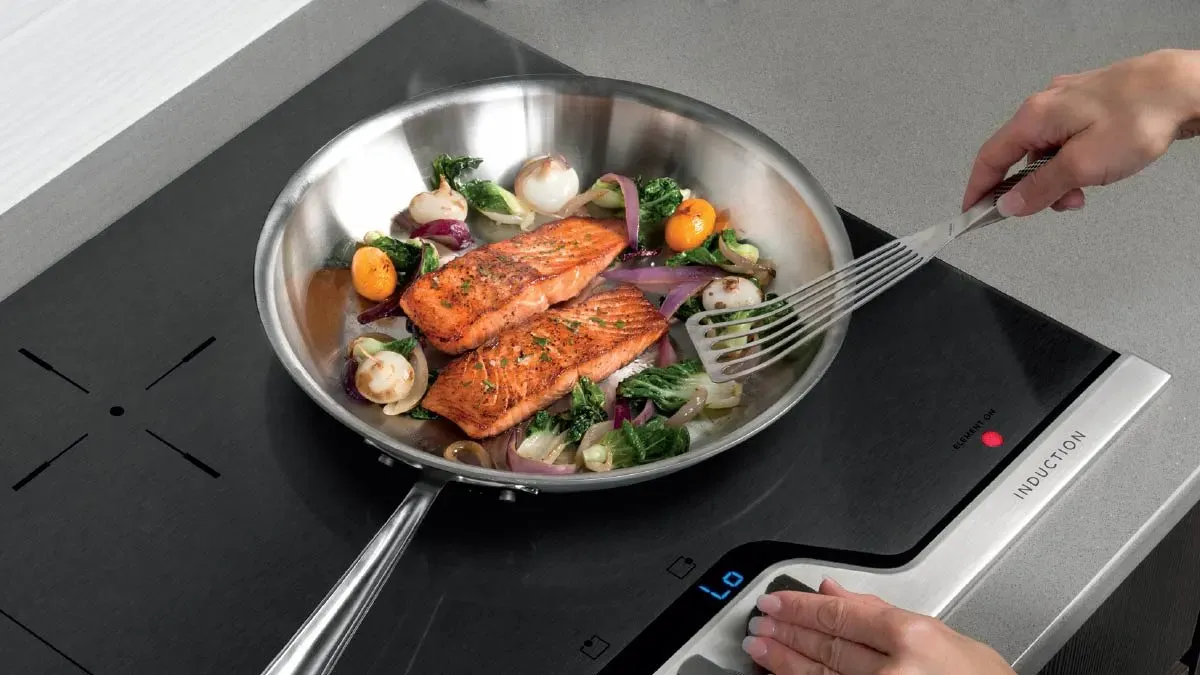
Beide Typen können durch Einfügen einer magnetischen Edelstahlschicht induktionskompatibel gemacht werden. Für Technologie für Kochgeschirr-Böden, Designer müssen sicherstellen, dass die magnetische Schicht durchgehend und dick genug ist, um effizient mit Induktionsfeldern zu interagieren. Vollständig ummantelte Designs erzielen oft eine höhere Induktionseffizienz, da die Konstruktion so ausgelegt werden kann, dass sie über die gesamte Kontaktfläche magnetisch permeabel ist.
Zusammenfassende Tabelle
| Vergleichsfaktor | Schlagfestes Kochgeschirr | Vollständig beschichtetes Kochgeschirr |
|---|---|---|
| Komplexität in der Fertigung | Einfacherer Prozess; schnellere Produktion; einfachere Skalierbarkeit | Erfordert präzises Walzverkleben/Laminieren; engere Toleranzen |
| Produktionskosten | Geringere Herstellungskosten; ideal für Massen-OEM | Höhere Produktionskosten; positioniert als Premium-Produktlinien |
| Verwindungssteifigkeit | Höheres Verzugsrisiko bei schlechter Verklebung oder bei Thermoschock | Bessere Verzugsbeständigkeit durch ausgewogene Mehrschichtdehnung |
| Delaminierungsrisiko | Mögliche Basisabtrennung bei wiederholter extremer Hitze | Sehr geringes Risiko aufgrund einer integrierten Schichtstruktur |
| Induktion Kompatibilität | Benötigt einen zusätzlichen magnetischen Edelstahlsockel | Magnetische Schichten können über den gesamten Kontaktbereich hinweg konstruiert werden. |
| Induktionswirkungsgrad | Gut, aber hauptsächlich an der Basis lokalisiert | Typischerweise höher aufgrund der durchgehenden magnetischen Kontaktfläche |
| Wärmeverteilung | An der Basis konzentriert | Gleichmäßige Wärmeverteilung über den Boden und die Seitenwände |
| Reaktionszeit | Schnelle Bodenheizung | Stabilere und vorhersehbarere Wärmereaktion |
| Hot-Spot-Risiko | Höher, insbesondere bei größeren Durchmessern | Minimale Hotspot-Bildung |
| Gewicht | Leichter, einfacher zu handhaben | Schwerer, liegt besser in der Hand |
| Energieeffizienz | Mäßig; mehr Verluste durch ungleichmäßige Verteilung | Höher; weniger Energieverschwendung |
| Mittelklasse-Verbrauchermarkt | Akzeptable Basisleistung | Bestes Preis-Leistungs-Verhältnis (3-lagig) |
| Professionelle Küchen | Im Allgemeinen nicht bevorzugt | Bevorzugte Wahl (5-lagige oder dickere Kerne) |
Auswahl verschiedener Märkte und Anwendungsfälle
- Einstiegs-/kostenorientierte Märkte: Stoßverbundböden bieten eine akzeptable Leistung zu geringeren Kosten. Sie eignen sich ideal für groß angelegte OEM-Produktionen, bei denen die Preissensibilität im Vordergrund steht.
- Die Verbraucher wollen jeden Tag bessere Ergebnisse: Die vollständig ummantelte Mittelklasse (3-lagig) bietet eine deutliche Steigerung der Kochsicherheit ohne den höchsten Preis.
- Professionelle Küchen und Enthusiasten: 5-lagig oder höher, vollständig ummantelt mit dickeren Kernen (oder Kupferkernen), bieten die Kontrolle und Konsistenz, die Köche benötigen.
Wenn Sie Käufer hinsichtlich der Technologie für Kochgeschirr-Böden beraten, sollten Sie den Kochmethoden Vorrang geben, die in Ihrem Markt geschätzt werden. Wenn Anbraten, Soßenzubereitung und sogar Köcheln Verkaufsargumente sind, investieren Sie in ein vollständig plattiertes Produkt. Für einfaches Braten oder preisgünstige Kochgeschirrserien bleibt die schlaggebundene Technologie eine pragmatische Wahl.
Schlussfolgerung
Das Verständnis der Technologie von Kochgeschirr-Böden – insbesondere der Unterschiede zwischen schlaggebundener und vollplattierter Konstruktion – ist für intelligentere Kauf- und Herstellungsentscheidungen unerlässlich. Schlaggebundene Designs bieten Kosten- und Gewichtsvorteile, während vollplattiertes Kochgeschirr eine hervorragende Wärmeverteilung, Stabilität und Leistung auf Profi-Niveau bietet. Wählen Sie die Technologie, die zum Kochstil Ihrer Nutzer, zur Preissensibilität und zum Markenversprechen passt, das Sie vermitteln möchten.
Über Chances
Seit der Gründung von Chances vor drei Jahrzehnten sind wir in der Lage, unseren Kunden spezifische und ausgereifte Technologien für Kochgeschirr-Böden in Form von maßgeschneiderten Lösungen anzubieten. Heute gehören wir zu den besten Anbietern in diesem Bereich. Professionelle Großhändler und Hersteller von Edelstahlkochgeschirr. Chances kann anbieten Großhandel mit Edelstahl-Kochgeschirr und ein spezifisches Maßgeschneiderte Kochgeschirr-Lösung um Ihren Bedürfnissen gerecht zu werden.
Im Rahmen unseres Großhandelsangebots für Kochgeschirr und unserer maßgeschneiderten Kochgeschirr-Lösungen hat Chances Folgendes geliefert:
✅Schnelle Reaktion durch Expertenteams
✅Effiziente Produktionen
✅Strenge Qualitätskontrolle
✅Schnelle Lieferung
FAQ
F: Ist eine vollständige Verkleidung immer besser?
A: Nicht immer. Es sorgt für eine gleichmäßigere Wärmeverteilung, aber ob das wichtig ist, hängt von Ihrem Anwendungsfall und Ihrem Budget ab.
F: Ist dickeres Kochgeschirr immer leistungsfähiger?
A: Nein. Die Dicke ist zwar hilfreich, aber die Materialqualität und die Haftfestigkeit sind wichtiger.
F: Bedeutet eine höhere Lagenzahl immer eine bessere Wärmeleistung?
A: Nein. Nach 3-lagiger Ausführung sind Leistungssteigerungen nur begrenzt möglich, es sei denn, die Kernmaterialien oder die Dicke werden deutlich verbessert.
F: Wie lautet die einfache Regel?
A: Eine gute Konstruktion ist wichtiger als große Zahlen.