EN
EN  FR
FR  DE
DE  RU
RU  AR
AR  ES
ES  PT
PT  JA
JA  KO
KO 
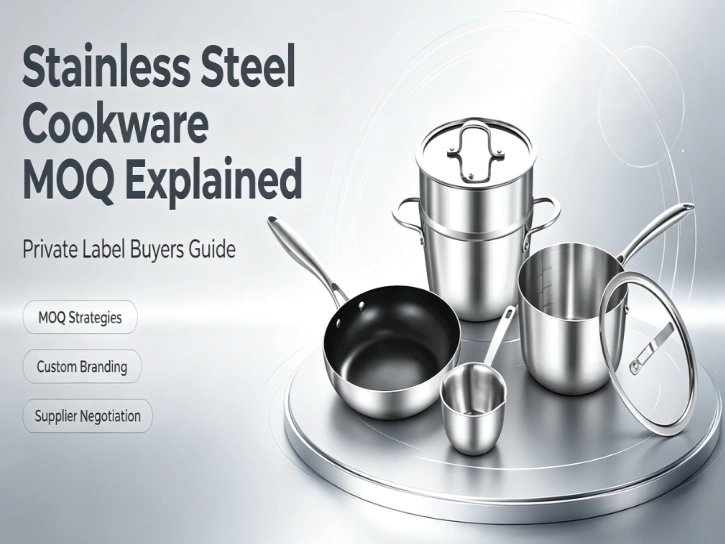
Understanding stainless steel cookware MOQ is essential for private label buyers looking to balance cost, customization, and inventory risk. MOQ is influenced by tooling, materials, packaging, production efficiency, and supplier capabilities—not simply by factory policy.
With over 20 years of manufacturing experience, Chances provides flexible OEM/ODM stainless steel cookware solutions, helping global brands, wholesalers, and distributors launch successful private label collections with reliable quality and competitive production strategies.
What Is Stainless Steel Cookware MOQ?
For importers, wholesalers, Amazon sellers, retailers, and private label brands, one of the first questions when sourcing cookware is:
“What is your MOQ?”
At first glance, MOQ (Minimum Order Quantity) appears to be a simple purchasing requirement. In reality, stainless steel cookware MOQ is determined by manufacturing economics, production efficiency, customization requirements, raw material procurement, and packaging configuration.
Many first-time buyers assume MOQ is simply a number chosen by the factory. However, experienced manufacturers establish MOQ based on production costs and operational efficiency.
Stainless steel cookware MOQ refers to the minimum quantity a manufacturer requires for one production run.
MOQ exists because every production batch involves fixed manufacturing costs regardless of whether 100 pieces or 10,000 pieces are produced. These costs include:
- Raw material preparation
- Machine setup
- Mold installation
- Production line adjustment
- Labor allocation
- Quality inspections
- Packaging setup
- Export documentation
Without a reasonable production volume, these fixed costs significantly increase the cost per unit, making manufacturing inefficient for both suppliers and buyers. MOQ helps manufacturers maintain stable production while allowing buyers to achieve competitive pricing.
Why Does Stainless Steel Cookware MOQ Matter?
For private label businesses, MOQ influences much more than purchasing quantity.
It directly affects:
- Initial investment
- Unit manufacturing cost
- Cash flow
- Inventory turnover
- Time-to-market
- Product customization options
- Long-term supply chain planning
Choosing the right stainless steel cookware MOQ helps businesses launch products with lower financial risk while maintaining enough inventory to meet customer demand.
Pros and Cons of Higher MOQ Orders
Pros
Lower Unit Cost
Higher production volumes reduce setup costs, material waste, and machine downtime, allowing manufacturers to offer more competitive pricing.
Better Production Efficiency
Larger orders improve manufacturing efficiency and simplify production scheduling, resulting in more stable quality and shorter production cycles.
Greater Customization Opportunities
Manufacturers are generally more willing to support custom molds, laser logos, premium packaging, and exclusive product designs for larger orders.
Stronger Supply Chain Stability
Consistent ordering helps secure raw material availability and production capacity, reducing supply chain disruptions.
Cons
Higher Initial Investment
Larger MOQs require greater upfront capital, which may be challenging for new brands or small businesses.
Inventory Management Pressure
Excess inventory increases warehousing costs and the risk of slow-moving products.
Reduced Product Flexibility
Large production runs make it more difficult to introduce new designs or respond quickly to changing market trends.
What Determines Stainless Steel Cookware MOQ?
Several manufacturing factors determine the final MOQ quoted by a cookware factory.
1. Product Complexity
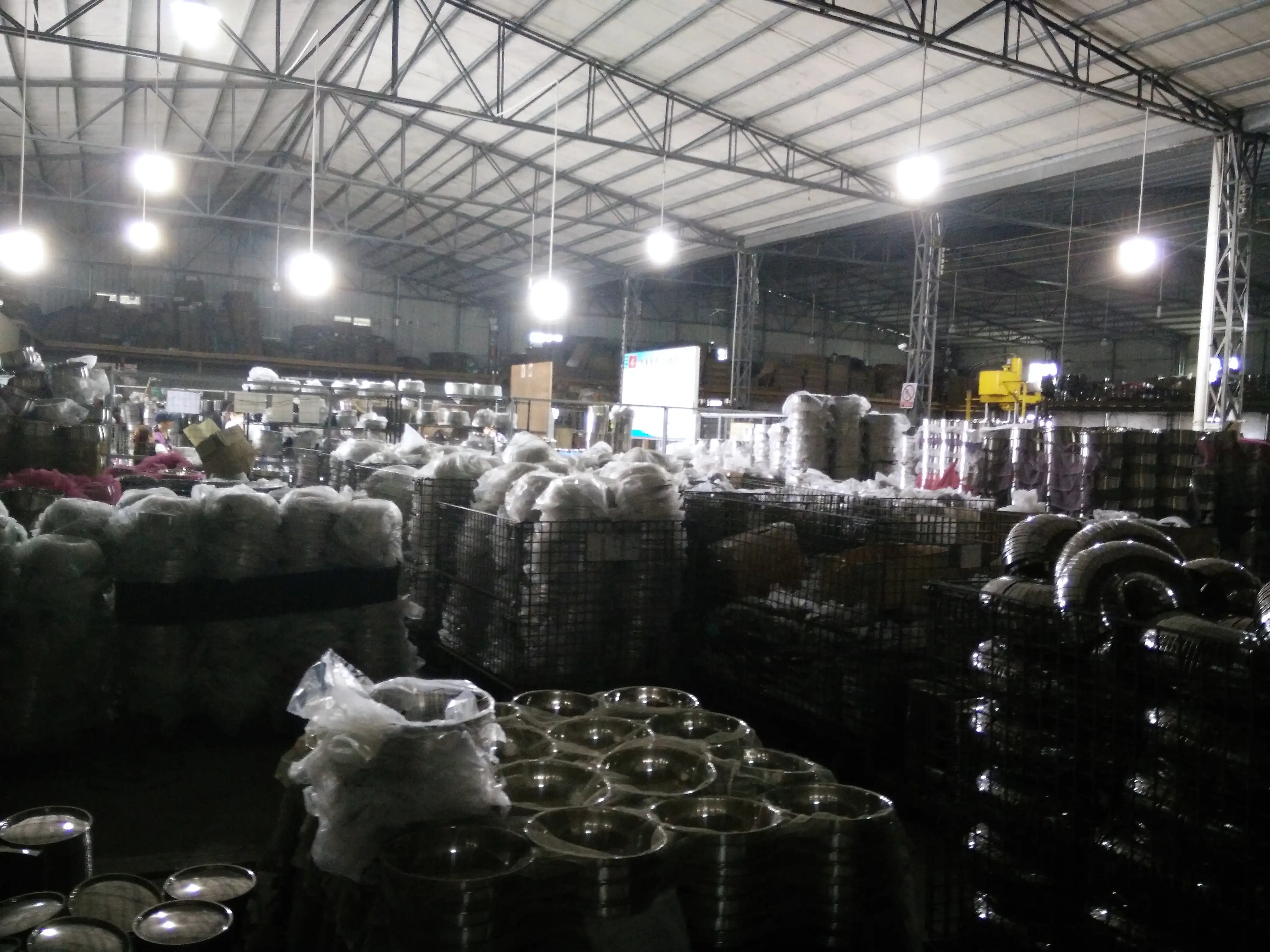
Simple products generally require lower MOQs than highly customized cookware.
For example:
- Standard stock pots
- Saucepans
- Mixing bowls
- Steamers
usually require smaller production quantities than products featuring:
- Multi-ply construction
- Special-shaped handles
- Complex lid assemblies
- Custom welded structures
- Unique accessories
The more production steps involved, the higher the economical production volume becomes.
2. OEM vs. ODM Manufacturing
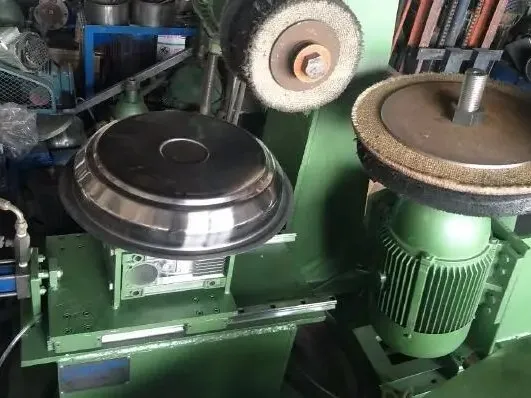
The manufacturing model has a significant impact on stainless steel cookware MOQ.
ODM Products
ODM products use existing molds and production lines.
Customization is usually limited to:
- Logo engraving
- Color box
- Instruction manual
- Packaging design
Because tooling already exists, ODM projects generally require lower MOQs and shorter lead times.
OEM Products
OEM projects involve custom development such as:
- New cookware shapes
- Exclusive handles
- Custom dimensions
- Unique lids
- Structural modifications
Since new tooling, engineering validation, and production testing are required, OEM cookware projects typically require higher MOQs to spread development costs efficiently.
3. Raw Material Procurement
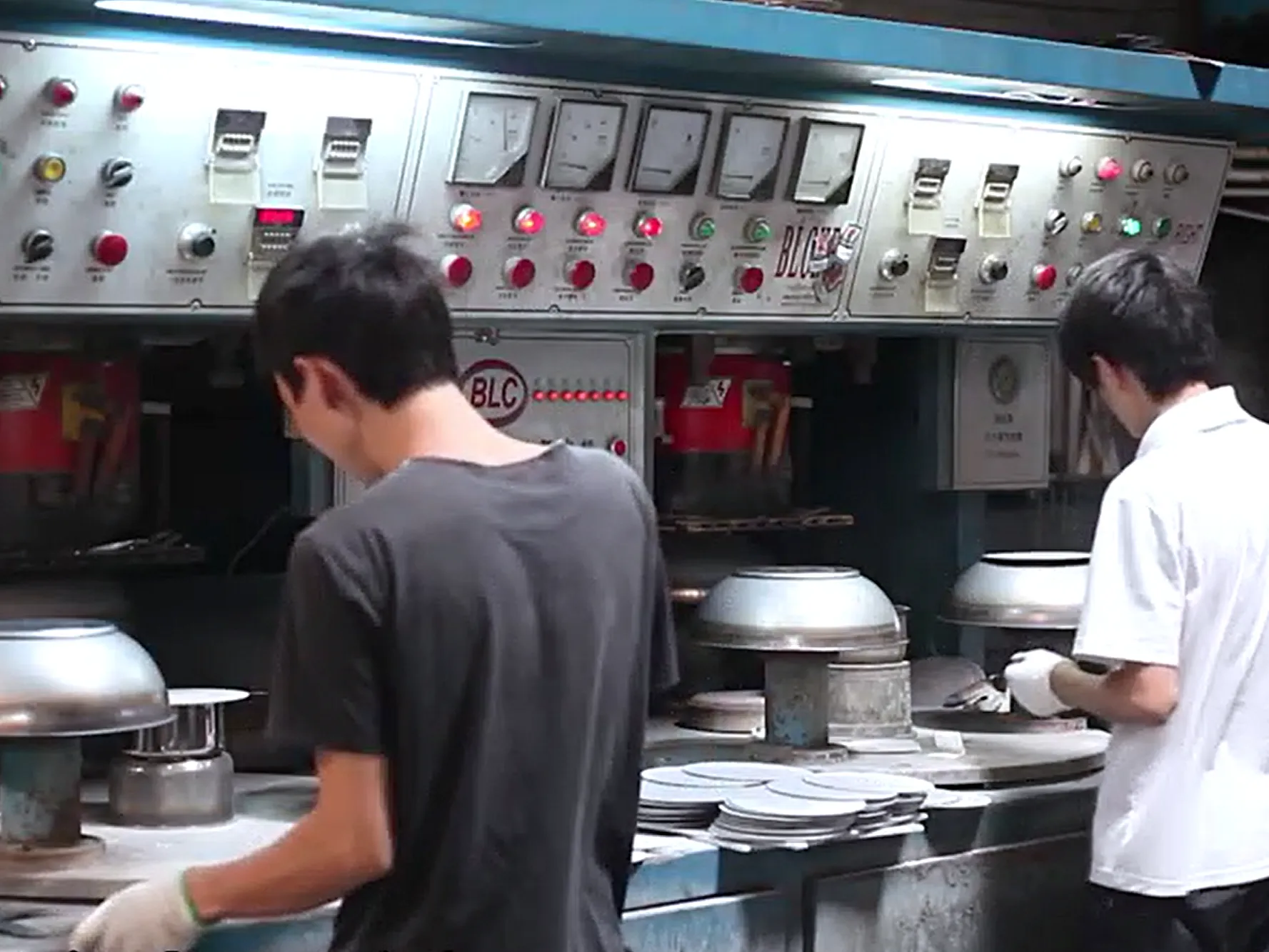
Raw material purchasing also affects MOQ.
Manufacturers usually purchase stainless steel coils in bulk according to:
- Steel grade
- Thickness
- Width
- Surface finish
If your product requires a special material specification, the steel mill itself may impose minimum purchasing quantities.
Common cookware materials include:
- 201 Stainless Steel
- 304 Stainless Steel
- 430 Stainless Steel
Less common materials or custom thicknesses often increase MOQ because suppliers must purchase larger raw material batches.
4. Custom Packaging Requirements
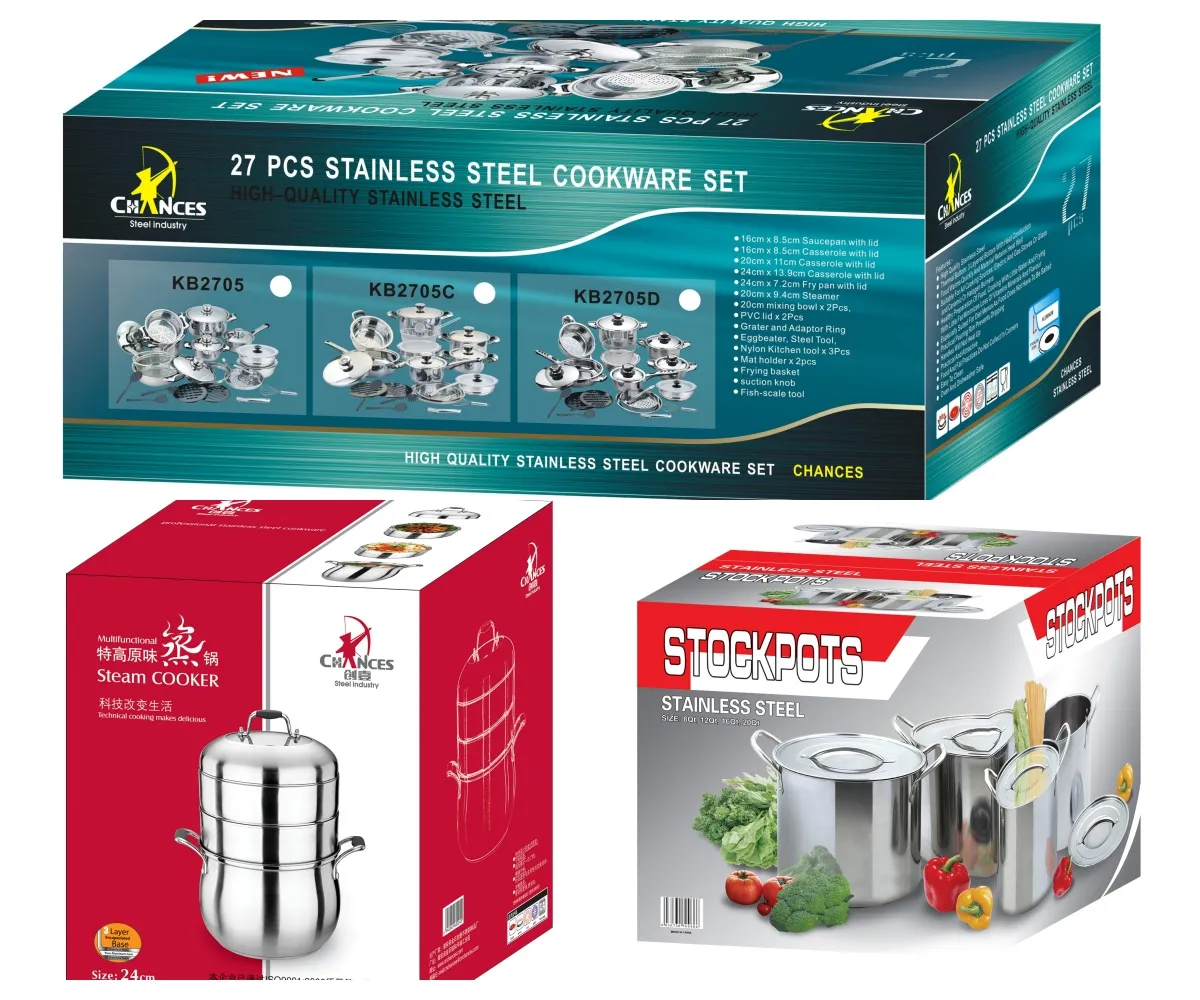
Many buyers overlook that packaging often has its own MOQ.
Examples include:
- Custom gift boxes
- Printed cartons
- Color labels
- User manuals
- Barcode stickers
- Retail display packaging
Printing companies typically require minimum production quantities for customized packaging, which can influence the overall stainless steel cookware MOQ even if the cookware itself could be produced in smaller batches.
5. Surface Finishes and Branding
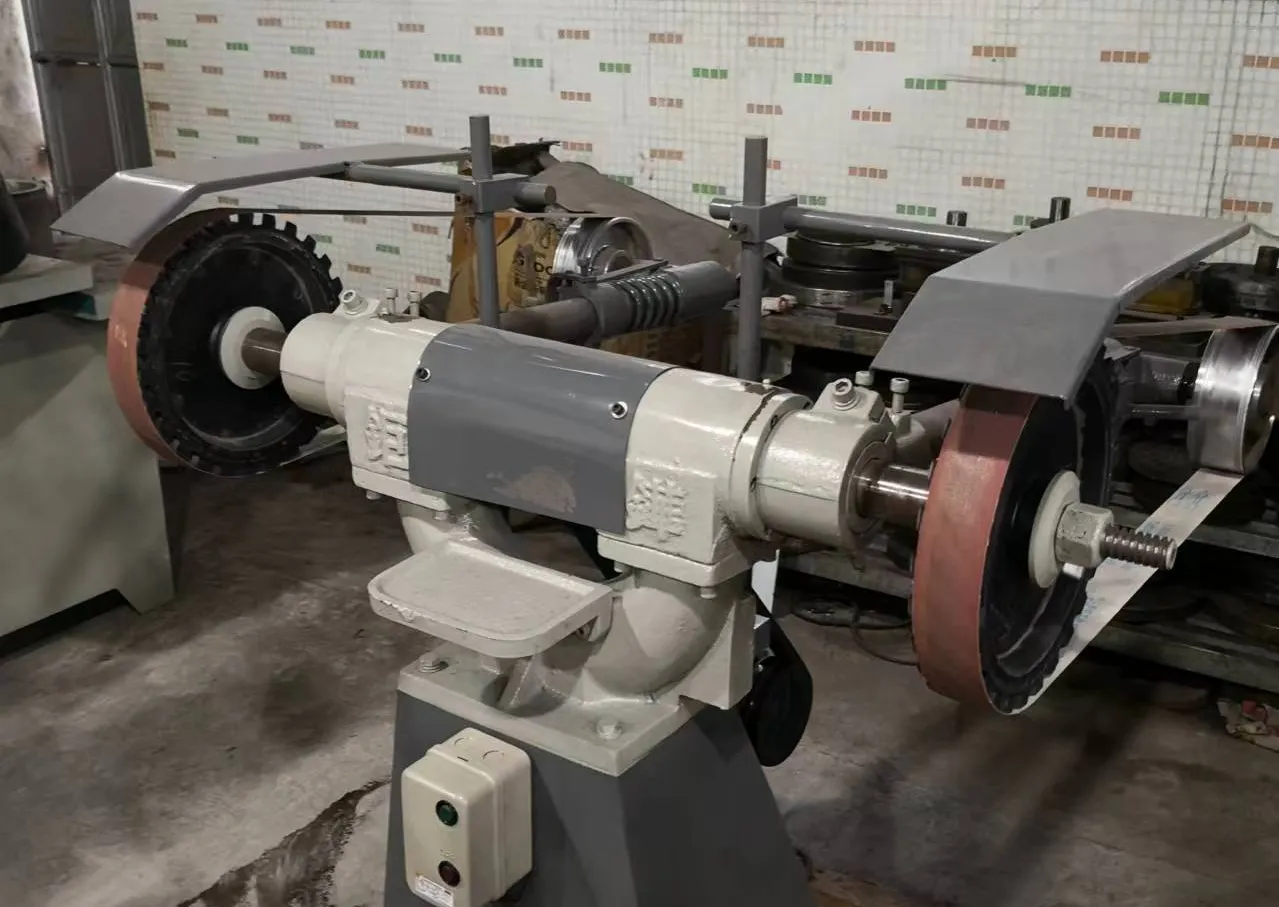
Premium finishing processes also affect production planning.
Examples include:
- Mirror polishing
- Satin brushing
- PVD coatings
- Laser engraving
- Embossed logos
- Custom handle colors
Additional finishing processes increase setup time, labor, and inspection requirements, making larger production runs more economical.
Typical Stainless Steel Cookware MOQ by Order Type
Although every manufacturer has different production capabilities, buyers can generally expect the following ranges:
| Order Type | Typical MOQ |
|---|---|
| Standard Catalog Products | 500–1,000 pcs |
| Private Label (Existing Mold) | 1,000–3,000 pcs |
| OEM Without New Tooling | 1,000–3,000 pcs |
| Fully Customized OEM Products | 3,000–5,000+ pcs |
Actual MOQs vary depending on product complexity, customization depth, packaging, and factory capacity. Buyers should confirm requirements during the quotation stage rather than assuming a universal standard.
Common Mistakes Private Label Buyers Make
Even experienced importers can make costly mistakes when managing stainless steel cookware MOQ. Avoiding these pitfalls helps reduce procurement risks, control inventory, and build stronger supplier relationships.
1. Choosing the Lowest MOQ Instead of the Best Value
A very low stainless steel cookware MOQ may seem attractive, but it often comes with higher unit costs, limited customization, or inconsistent quality. Evaluating the total cost of ownership—including quality, lead time, and after-sales support—is usually more beneficial than focusing on MOQ alone.
2. Ignoring Tooling and Mold Costs
For custom cookware, buyers often overlook one-time tooling or mold development fees. While these costs increase the initial investment, they enable unique product designs that strengthen brand identity and create long-term market differentiation.
3. Requesting Too Many Product Variations
Offering multiple colors, sizes, lid options, and handle styles within a single order can complicate production planning. This often leads to higher stainless steel cookware MOQ requirements, longer lead times, and increased inventory management challenges.
4. Underestimating Market Demand
Ordering quantities that exceed actual sales capacity can create excess inventory and cash flow pressure. Conversely, ordering too few units may result in frequent replenishment orders with higher logistics costs. Accurate sales forecasting is essential for determining an optimal order quantity.
How to Evaluate a Stainless Steel Cookware Manufacturer
MOQ is only one factor when selecting a supplier. A comprehensive evaluation should include manufacturing capability, quality systems, and long-term partnership potential.
| Evaluation Area | Questions to Ask |
|---|---|
| Manufacturing Experience | How many years has the factory produced stainless steel cookware? |
| Production Capacity | Can production meet future business growth? |
| OEM/ODM Capability | Can custom products and private labels be developed? |
| Quality Control | What inspections are performed before shipment? |
| Certifications | Does the factory operate under recognized quality systems? |
| Export Experience | Which international markets are currently served? |
| Lead Time | Can delivery schedules remain stable during peak seasons? |
| Communication | Does the supplier provide timely technical and after-sales support? |
Choosing a manufacturer based on these factors helps reduce procurement risks far more effectively than selecting the lowest MOQ alone.
How to Negotiate Stainless Steel Cookware MOQ with Manufacturers
MOQ should not be viewed as a fixed barrier. Professional manufacturers are often willing to adjust order requirements based on the overall business opportunity.
Here are several practical negotiation strategies:
- Begin with standard catalog products before requesting customized designs.
- Consolidate multiple cookware models into one production order.
- Increase order quantities gradually after validating market demand.
- Accept standard packaging for the first order to reduce setup costs.
- Establish long-term purchasing agreements to gain greater production flexibility.
- Discuss annual purchase forecasts instead of focusing solely on the initial order.
By demonstrating long-term cooperation potential, buyers can often secure more favorable MOQ arrangements while maintaining competitive pricing.
FAQ
Q1: What is a typical stainless steel cookware MOQ?
The stainless steel cookware MOQ varies depending on the product, customization level, and manufacturing process. Standard cookware may require only a few hundred units, while fully customized products generally require higher minimum quantities.
Q2: Why do OEM products usually have higher MOQs?
OEM products often involve custom molds, laser logos, packaging, and production adjustments. Manufacturers need larger production runs to distribute these setup costs efficiently.
Q3: Can startups negotiate lower MOQs?
Yes. Many experienced manufacturers support startups by recommending existing designs, simplifying packaging, or combining multiple products into one production order.
Q4: Does a higher MOQ always mean better pricing?
Generally yes, but buyers should evaluate the total value—including quality, lead time, customization, and service—instead of focusing only on unit price.
Q5: How can private label buyers reduce procurement risks?
Work with manufacturers that provide sample evaluation, transparent quotations, stable quality control systems, export experience, and flexible OEM/ODM services. Long-term partnerships often deliver greater value than one-time low-cost purchases.
Conclusion
Understanding stainless steel cookware MOQ is essential for building a successful private-label cookware business. MOQ is not simply a purchasing restriction—it reflects production efficiency, manufacturing costs, customization requirements, and supply chain planning.
Rather than searching for the lowest MOQ, buyers should seek a manufacturing partner that offers the right balance of flexibility, product quality, competitive pricing, and long-term support. By planning product specifications carefully, forecasting demand accurately, and maintaining open communication with suppliers, private-label brands can optimize procurement costs while building a reliable and scalable product portfolio.
Partner with Chances for Flexible OEM Stainless Steel Cookware Solutions
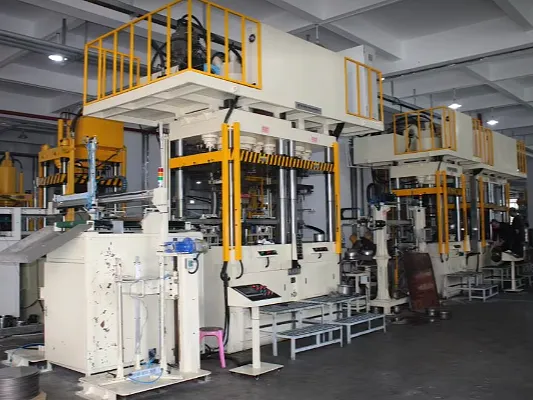
With more than 20 years of manufacturing experience, Chances is a trusted wholesale manufacturer specializing in stainless steel cookware and kitchenware. Our integrated production system covers every stage—from raw material processing and precision forming to polishing, assembly, inspection, and packaging—ensuring consistent quality and efficient production.
We provide flexible OEM/ODM services for importers, wholesalers, distributors, retailers, and private-label brands worldwide. Whether you are launching a new cookware collection or expanding an existing product line, our experienced engineering team can help optimize product design, recommend practical stainless steel cookware MOQ solutions, and support your long-term business growth.
At Chances, quality control is built into every production stage, enabling us to deliver durable, food-safe, and market-ready cookware at competitive prices. We are committed to building lasting partnerships through reliable manufacturing, responsive service, and customized solutions.
Contact Chances today to discuss your private-label cookware project and discover how our flexible OEM/ODM capabilities can help your brand succeed in global markets.
Related Products
-

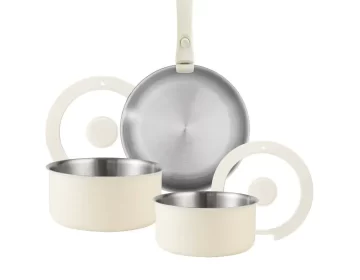
Wholesale Stainless Steel Tri Ply Cookware Set With Removable Handles
-
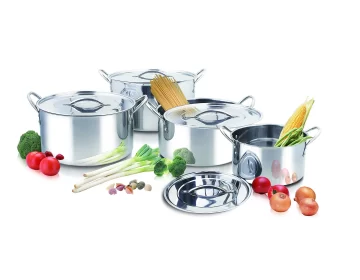
Wholesale Stainless Steel Stock Pot with Lid Storage Pot Set 8 Pcs for Kitchen Cooking
-
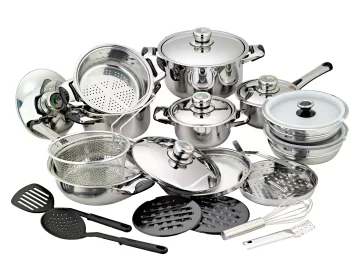
Wholesale Stainless Steel Cookware Set 27 Piece with Wide Rim Butterfly Handle and Steel Lid
-
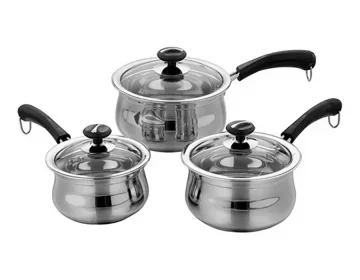
Wholesale Saucepan Set Stainless Steel with Korean Style 6 Piece Set