EN
EN  FR
FR  DE
DE  RU
RU  AR
AR  ES
ES  PT
PT  JA
JA  KO
KO 

If you are a retailer, distributor, or private-label brand planning to buy cookware in bulk from China, this is the right cookware wholesale guide for sourcing.
Chances, a wholesale cookware manufacturer, is delighted to share it with you. In our sharing, we focused on “how” to execute, prioritizing decision points that procurement teams face, including supplier selection, RFQs, sampling, compliance, production control, logistics, and contract protection. Follow these steps to reduce risk, shorten time-to-shelf, and protect margins.
Start with a Clear Sourcing Brief
How you prepare determines how well suppliers respond. This is the very first step in a cookware wholesale guide for sourcing.
- Define product scope: material (stainless steel, aluminum, tri-ply), construction (disc base, full-clad), finishes (mirror/satin/PVD), and accessories (lids, handles).
- Specify target markets and regulatory requirements (FDA, LFGB, EU 10/2011).
- Set target FOB price range, annual volumes, and SKU strategy (sizes, colors).
- Decide service model: OEM (branding) or ODM (supplier design).
- Provide a basic timeline: sampling → pilot → mass production dates.
Make this brief a single document to attach to your RFQ.
How to Find and Pre-screen Suppliers
You should use multiple channels and apply quick filters.
- Channels: trade shows (Canton Fair, local expos), verified B2B platforms, industry directories, and local sourcing agents.
- First-pass filters: factory (not trading company) for core production capability; export experience in cookware; references from similar customers.
- Verify: company registration, number of production lines (stamping, welding, polishing, coating), and export license.
- Red flags: no factory photos, refusal to provide COA or sample, or unusually low MOQ with no technical details.
Create a shortlist of 5–8 suppliers for RFQs.
RFQ Best Practices — What to Include
A well-constructed RFQ shortens negotiation and reduces misinterpretation.
Required elements
- Drawing/spec sheet (DWG/PDF), material grades (e.g., 304/430/Al5052), dimensions, tolerances.
- Surface spec: interior Ra value, passivation, electropolish needs, exterior finish.
- Base construction: tri-ply/clad details or disc specs (layer thickness, bonding method).
- Functional tests: flatness after thermal cycle, peel/shear strength, adhesion, Taber abrasion.
- Packaging, labeling, and barcodes.
- MOQ, sample cost & lead time, mass production lead time.
- Payment terms and warranty clauses.
Ask suppliers to break down price components (material, processing, finishing) to identify cost drivers.
Sampling: What to Test and How (Practical Checklist)
In this step of the cookware wholesale guide for souring, you should know that treat samples as technical prototypes, not final aesthetics.
Lab & in-kitchen tests
- Dimensional check vs. drawing; weight and wall thickness.
- Surface Ra measurement and visual finish acceptance.
- Function tests: induction response, heating uniformity, lid seal, and handle torque tests.
- Real cooking: sauté, sear, simmer, dishwasher cycle (as relevant).
- Coating tests (if applicable): adhesion (cross-cut), abrasion (Taber), and migration reports.
Require a First-Piece Approval (FPA) report and golden sample sign-off before pilot order.
Compliance & Certifications — Lock This into the Contract
Specify what counts as “compliant” for your channel and enforce it.
- For EU distribution: LFGB / EU 10/2011 test reports for finished goods (not just raw material CoA).
- For US distribution: FDA-compliant materials and migration tests.
- For Australia/Japan or retail chains: request local market test evidence.
- Include re-test frequency (e.g., annual or per shipment) and who pays for re-testing on failures.
Use the RFQ to ask for CoA, batch traceability, and third-party lab reports. Don’t accept supplier self-declarations as the only proof.
Production Control: How to Prevent Quality Drift
Mass production often diverges from approved samples. Control key stages.
- Pre-production PP sample and pilot run (small lot) — must match golden sample.
- In-process checkpoints: raw material arrival, after forming, after bonding/finishing, pre-pack.
- Inspection options: supplier QC, third-party AQL inspections, or your QA team on site.
- Specify AQL levels and acceptance criteria for surface defects, weld quality, and dimensional tolerances.
- Require photographic reporting for every major batch.
Include corrective action timelines and financial penalties for critical failures.
Logistics, Incoterms & Costs — How to Choose
Through this cookware wholesale guide for sourcing, it tells you that logistics a procurement decision, not an afterthought.
- First-time buyers prefer FOB to control carrier selection; move to DDP if you want predictable landed costs.
- Consolidate SKUs to optimize container utilization; packed volume drives freight cost.
- Account for seasonality: Chinese New Year and peak manufacturing months add lead times.
- Consider bonded warehouse or port inspection to speed customs clearance for repeat shipments.
Model landed cost (unit + duty + freight + QC + insurance) to set retail prices and negotiate margins.

Payments, Warranties & IP Protection — Contractual How-tos
This is aonther significant step in this cookware wholesale guide for sourcing: protect cash and IP while fostering supplier commitment.
- Payment terms: sample-paid, 30% deposit, 70% B/L or after third-party inspection; use L/C for high value.
- Tooling/mold ownership: define who pays and who owns the dies; include amortization schedule.
- IP: Sign a Non-Disclosure and IP transfer clause if you supply designs. Register trademarks locally if necessary.
- Warranty & returns: define allowable failure rates, return logistics, and remedies (repair, replacement, refund).
Use escrow or staged payments tied to inspection milestones for large orders.
Quick Summary of the Cookware Wholesale Guide for Sourcing
- Material grades & CoA required.
- Interior Ra value & passivation needed.
- Base construction (tri-ply specs) and bonding method.
- Sample sign-off procedure and pilot run requirement.
- List of mandatory lab tests (adhesion, peel, thermal cycle).
- AQL levels and inspection frequency.
- MOQ, lead time, payment terms, and warranty.
Conclusion
This cookware wholesale guide for sourcing in China focuses on practical actions you can take now: prepare a precise RFQ, insist on measurable sample tests, lock compliance into contracts, implement in-process QC, and manage logistics and payments strategically. China offers deep manufacturing capability for cookware, but success depends on disciplined procurement practices. Follow the outlined steps to reduce risk, control quality, and bring reliable, profitable cookware SKUs to your customers.
About Chancescook
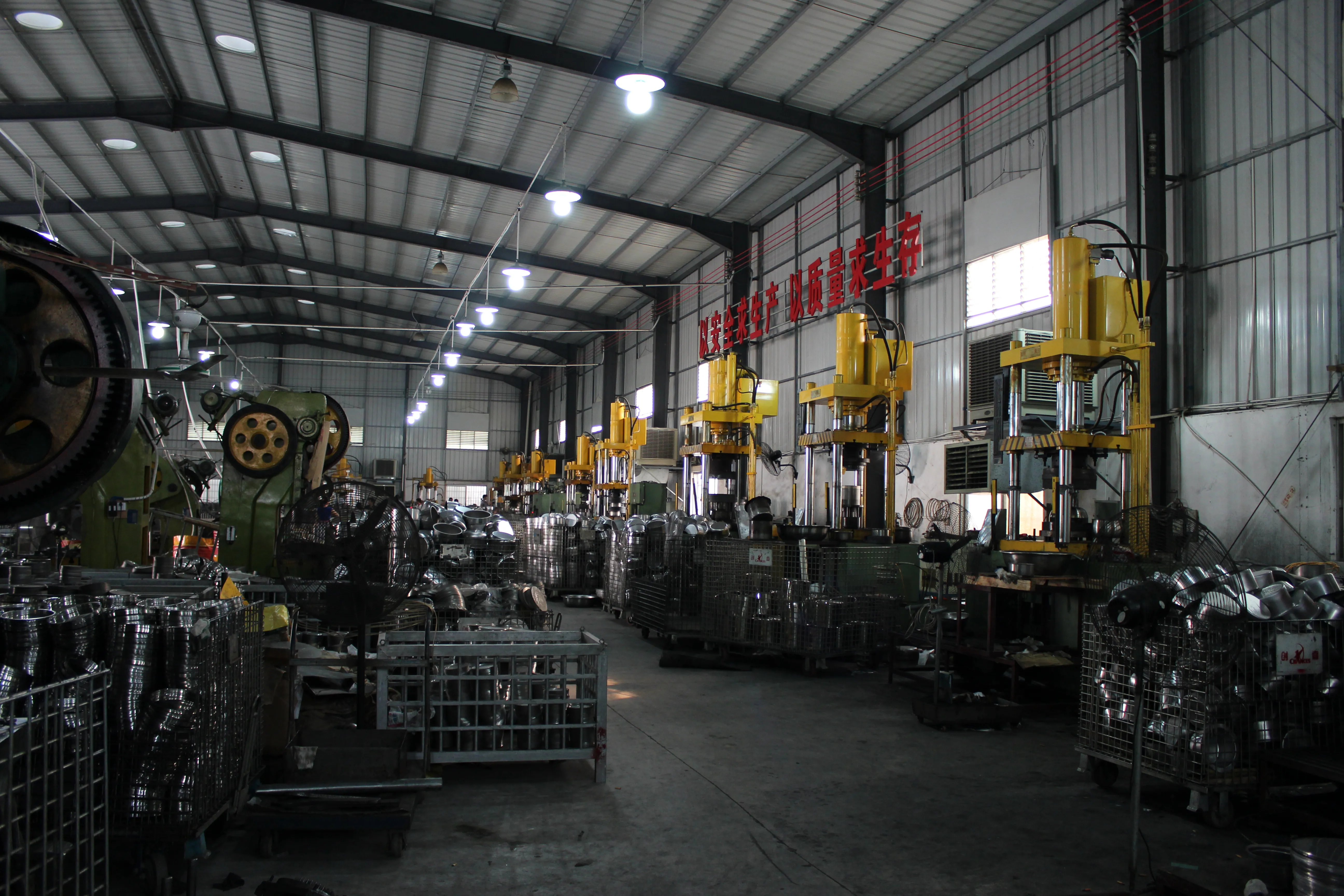
Chances is a well-established stainless steel cookware wholesale manufacturer located in Chaozhou, China. With more than 20 years of experience, our wholesale cookware and kitchenware had been exporting to markets across South America, Southeast Asia, the Middle East, Africa, Europe, and the United States. This cookware wholesale guide is more like about experience summary after we had done so many international tradings.
Our company integrates raw material sourcing, precision engineering, and finished product assembly to support large-scale wholesale cookware supply and custom cookware solutions. With a focus on innovation, quality control at every stage, and market-driven design, Chances continues to deliver durable and high-performance stainless steel cookware to partners worldwide.
FAQ:
Our cookware wholesale guide for sourcing has collected some of the pitfall to reminde you.
Q1: Is choosing the lowest price a good sourcing strategy?
A: No. Always prioritize specification and compliance over price in any cookware wholesale sourcing decision.
Q2: Can I rely on samples to represent mass production quality?
A: No. Samples are indicative only—require pilot runs to validate real production consistency.
Q3: Why are inspection standards critical in cookware sourcing from China?
A: Undefined criteria lead to disputes. Set AQL levels and test methods upfront.
Q4: How can buyers reduce supply chain delay risks?
A: Build time buffers and qualify backup suppliers as part of your sourcing plan.
Q5: How do experienced buyers improve future sourcing cycles?
A: Document issues after each order and continuously refine your RFQ template.